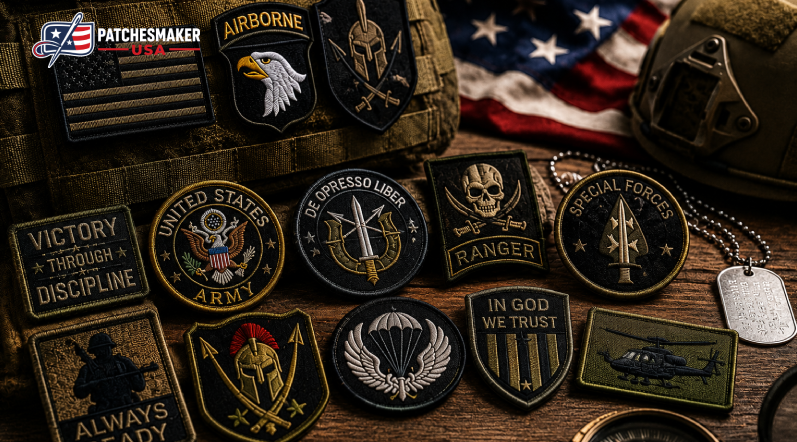
Military patches are among the most recognizable symbols found on military uniforms, tactical gear, and service apparel. More than simple decorations, these patches tell stories of service, achievement, loyalty, and sacrifice. They identify units, recognize specialized skills, commemorate deployments, and preserve military traditions that often span generations.
From soldiers on the battlefield to veterans preserving memories of their service, military patches carry deep meaning. They serve as visual records of military history while helping active personnel build a sense of belonging and pride within their units.
Today, military patches have expanded beyond traditional armed forces. Law enforcement agencies, tactical response teams, security organizations, first responders, collectors, and outdoor enthusiasts all use military-style patches to represent identity and accomplishments.
In this comprehensive guide, we’ll explore the history of military patches, the different types used throughout the armed forces, their symbolic meaning, modern manufacturing methods, and how organizations can create high-quality custom military patches through Patches Maker USA.
What Are Military Patches?
Military patches are embroidered, woven, or PVC insignia worn on uniforms and tactical equipment. They are designed to identify military personnel, units, ranks, qualifications, deployments, and achievements.
Unlike standard logos or badges, military patches often carry significant historical and emotional value. A single patch may represent years of training, participation in important operations, or membership in an elite unit.
Modern military patches are commonly attached to:
- Combat uniforms
- Tactical vests
- Backpacks
- Flight suits
- Field jackets
- Plate carriers
- Deployment gear
They remain one of the most visible symbols of military identity.
The Origins of Military Patches
The history of military patches stretches back more than a century.
Before standardized patches existed, armies used flags, insignia, and colored uniform elements to distinguish soldiers and military formations. As warfare became more organized, commanders needed faster ways to identify units during combat.
During the American Civil War, many military organizations adopted corps badges to help soldiers identify friendly forces quickly. These early insignia laid the foundation for modern military patch systems.
As military organizations expanded, visual identification became increasingly important, especially during large-scale operations involving multiple divisions and specialized units.
World War I and the Birth of Modern Unit Patches
Military patches became widely adopted during World War I.
One of the most famous early examples was the shoulder sleeve insignia used by the United States Army’s 81st Infantry Division. Soldiers adopted a distinctive wildcat symbol to identify their division, creating what many historians consider one of the first official military unit patches.
The success of these patches quickly encouraged other divisions to create their own identifying symbols.
World War I demonstrated that patches served both practical and psychological purposes. They helped soldiers identify their units while also strengthening morale and unit pride.
Military Patches During World War II
World War II dramatically expanded the use of military patches.
Virtually every division, regiment, squadron, and support unit developed distinctive insignia. Soldiers, sailors, airmen, and marines wore patches representing their organizations and operational assignments.
During this period, military patch designs became increasingly creative.
Air Force squadrons often designed unique emblems inspired by aircraft nose art. Infantry divisions developed symbols reflecting their heritage, mission, and combat history.
Many of the most recognizable military patches used today originated during this era.
The Evolution of Military Patches in Modern Warfare
Modern military patches continue to evolve.
Today’s armed forces use patches not only for identification but also for recognizing specialized training, deployments, operational achievements, and mission participation.
Modern patches can be found on:
- Combat uniforms
- Tactical gear
- Body armor
- Backpacks
- Aviation flight suits
- Naval uniforms
Velcro-backed tactical patches have become particularly popular because they allow personnel to change insignia quickly depending on assignments and operational requirements.
Why Military Patches Matter in Today’s Armed Forces
Military patches remain important because they communicate essential information instantly.
Unit Identification
One of the primary functions of military patches is identifying the soldier’s unit.
Unit patches help personnel recognize:
- Divisions
- Brigades
- Battalions
- Squadrons
- Special operations groups
These insignia create a strong sense of identity and belonging among service members.
Recognition of Skills and Qualifications
Many military patches recognize specialized training and qualifications.
Examples include:
- Airborne qualifications
- Ranger certifications
- Special operations training
- Medical corps designations
- Intelligence units
- Aviation qualifications
These patches symbolize expertise and dedication.
Building Morale and Pride
Military organizations rely heavily on teamwork.
Patches help strengthen morale by creating visual symbols that unite members around shared goals, values, and accomplishments.
Morale patches have become especially popular among tactical units and specialized teams.
Commemorating Deployments and Missions
Military patches often commemorate:
- Combat deployments
- Peacekeeping operations
- Humanitarian missions
- Training exercises
- Historic campaigns
These patches preserve important memories and serve as lasting reminders of military service.
The Main Types of Military Patches
Military organizations use several categories of patches.
Unit Patches
Unit patches identify the military organization to which a service member belongs.
Common examples include:
- Infantry divisions
- Airborne units
- Armored brigades
- Aviation squadrons
These patches are typically worn on the upper sleeve.
Rank Insignia Patches
Rank patches communicate leadership responsibility and military authority.
They help establish command structures and allow personnel to identify leadership positions quickly.
Specialty and Qualification Patches
Specialty patches recognize advanced skills and training.
These may include:
- Airborne qualifications
- Special Forces certifications
- Combat medic designations
- Intelligence specialties
These patches often represent significant accomplishments within military careers.
Campaign and Combat Patches
Combat and deployment patches commemorate operational service.
Many veterans consider these patches among the most meaningful insignia they earn.
Morale Patches
Morale patches are designed to strengthen team spirit and organizational culture.
Unlike official unit insignia, morale patches often feature creative artwork, slogans, and symbols.
Today, morale patches are extremely popular among military personnel, law enforcement officers, and tactical enthusiasts.
Organizations seeking custom morale patches often choose specialized manufacturers such as Patches Maker USA for unique designs and durable construction.
Understanding Military Patch Symbols and Their Meanings
Military patches use powerful symbolism to communicate identity and values.
Stars
Stars often represent:
- Achievement
- Leadership
- National identity
- Excellence
Eagles
Eagles symbolize:
- Strength
- Freedom
- Authority
- Protection
They remain one of the most common military symbols worldwide.
Swords
Swords represent:
- Combat readiness
- Courage
- Military strength
- Defense capabilities
Shields
Shields symbolize:
- Protection
- Security
- Defense
- Resilience
These symbols help communicate the mission and values of military organizations.
The Meaning Behind Military Patch Colors
Colors also play an important role.
Red
Represents:
- Courage
- Sacrifice
- Determination
Blue
Symbolizes:
- Loyalty
- Trust
- Integrity
Gold
Represents:
- Excellence
- Achievement
- Honor
Black
Often associated with:
- Professionalism
- Tactical operations
- Strength
- Authority
Green
Commonly linked to:
- Military service
- Field operations
- Readiness
The combination of symbols and colors creates meaningful designs that tell powerful stories.
How Military Patches Are Manufactured Today
Military patch production has advanced significantly over the years. Modern manufacturing techniques allow organizations to create highly detailed patches that can withstand demanding environments while maintaining a professional appearance.
Today’s military patches are commonly produced using embroidery, woven construction, and PVC molding. Each method offers unique advantages depending on the intended application.
Embroidered Military Patches
Embroidered patches remain the traditional choice for military organizations.
They feature raised stitching that creates a textured appearance and professional finish. Embroidery works exceptionally well for:
- Unit insignia
- Rank patches
- Division patches
- Veteran organizations
- Military commemorative patches
At Patches Maker USA, custom embroidered patches remain one of the most requested options because they combine durability, visibility, and timeless military styling.
PVC Military Patches
PVC patches have become increasingly popular among modern tactical units.
Manufactured using flexible rubber-like materials, they offer several advantages:
- Waterproof construction
- UV resistance
- Exceptional durability
- Easy cleaning
- Outstanding detail reproduction
Custom PVC patches are frequently used on:
- Tactical backpacks
- Plate carriers
- Outdoor equipment
- Law enforcement gear
- Military training equipment
For personnel operating in harsh environments, PVC patches often provide superior performance compared to traditional embroidery.
Woven Military Patches
Woven patches allow for greater design precision.
Unlike embroidery, woven patches use thinner threads to create detailed images and smaller text. This makes them ideal for:
- Complex logos
- Detailed insignia
- Small lettering
- Multi-layered artwork
Organizations requiring intricate patch designs often choose woven construction to achieve maximum detail.
Military Patch Material Comparison
Choosing the right material is an important part of any patch project.
| Material | Durability | Weather Resistance | Detail Level | Best Use |
|---|---|---|---|---|
| Embroidered | High | Moderate | Good | Traditional military uniforms |
| PVC | Very High | Excellent | Excellent | Tactical gear and outdoor use |
| Woven | High | Good | Exceptional | Detailed insignia and small text |
| Chenille | Moderate | Moderate | Moderate | Commemorative and ceremonial patches |
Understanding these differences helps organizations choose the most appropriate solution for their needs.
The Rise of Velcro Military Patches
Modern military and tactical gear increasingly relies on Velcro-backed patches.
These patches provide flexibility by allowing users to:
- Change insignia quickly
- Update unit assignments
- Customize tactical gear
- Rotate morale patches
- Remove patches for maintenance
Custom Velcro patches are widely used by:
- Military personnel
- Law enforcement agencies
- Security contractors
- Airsoft teams
- Emergency response units
Their convenience makes them one of the fastest-growing categories within the patch industry.
Quality Standards for Military Patch Manufacturing
Not all military patches are manufactured to the same standard.
Organizations seeking professional-quality patches should evaluate suppliers based on several critical factors.
Stitching Quality
Embroidery should be:
- Tight and consistent
- Free from loose threads
- Cleanly finished
- Uniform throughout the design
Poor stitching reduces durability and negatively impacts appearance.
Color Accuracy
Colors should closely match approved artwork.
Professional patch manufacturers use color-matching systems to ensure consistency across production runs.
This is especially important for:
- Military insignia
- Organizational branding
- Historical reproductions
Border Construction
A patch’s border significantly affects durability.
Common border styles include:
- Merrow borders
- Laser-cut borders
- Heat-cut borders
Strong borders help prevent fraying and extend patch lifespan.
Backing Quality
The correct backing depends on how the patch will be used.
Options include:
- Sew-on backing
- Velcro backing
- Iron-on backing
- Adhesive backing
Military and tactical applications generally favor sew-on or Velcro-backed patches.
How to Choose a Military Patch Supplier
Selecting the right manufacturer can determine the success of your project.
Before placing an order, consider the following factors.
Experience with Military Designs
Military insignia often require precision and historical accuracy.
Choose a manufacturer experienced in producing:
- Unit patches
- Tactical patches
- Morale patches
- Veteran patches
- Commemorative military designs
Design Assistance
Professional suppliers should help customers optimize artwork for production.
Look for companies that offer:
- Digital mockups
- Artwork cleanup
- Color recommendations
- Size guidance
Material Options
A quality manufacturer should offer multiple production methods, including:
- Embroidered patches
- PVC patches
- Woven patches
- Velcro-backed patches
More options allow greater customization and flexibility.
Customer Reviews
Reviews provide valuable insight into:
- Product quality
- Production consistency
- Customer service
- Delivery reliability
Positive feedback often indicates a trustworthy supplier.
Military Patches Beyond Active Service
Military patches are no longer limited to active-duty personnel.
Many individuals collect, display, and preserve patches because of their historical and personal significance.
Veterans
For veterans, patches often represent:
- Years of service
- Deployments
- Friendships
- Career accomplishments
Many former service members display patches in shadow boxes, framed collections, and memorabilia displays.
Collectors
Military patch collecting has become a major hobby worldwide.
Collectors search for:
- Historical patches
- Combat patches
- Unit insignia
- Rare morale patches
- Special operations patches
Some patches become highly valuable due to rarity and historical significance.
Law Enforcement and Tactical Teams
Many tactical organizations adopt military-style patches to promote:
- Team identity
- Professional appearance
- Unit recognition
Custom police patches and tactical patches are now widely used by specialized response teams and security organizations.
How to Identify Authentic Military Patches
Collectors and historians often evaluate military patches carefully before purchasing them.
Several characteristics help determine authenticity.
Construction Quality
Authentic military patches typically feature:
- Precise embroidery
- Accurate colors
- High-quality materials
- Professional finishing
Historical Verification
Collectors often research:
- Unit history
- Deployment records
- Production periods
- Military archives
Documentation significantly increases collector confidence.
Material Consistency
Older military patches frequently display construction methods specific to their production era.
Understanding these characteristics helps collectors avoid reproductions and counterfeit items.
Why Rare Military Patches Can Become Valuable
Certain military patches command significant collector interest.
Factors influencing value include:
Historical Importance
Patches associated with notable operations often attract collectors.
Limited Production
The fewer patches produced, the greater their rarity.
Elite Units
Special Forces, airborne units, and specialized organizations often generate strong collector demand.
Veteran Provenance
Patches linked to documented service histories frequently carry additional value.
As a result, military patch collecting remains one of the most active segments of military memorabilia.
Why Choose Patches Maker USA for Custom Military Patches?
At Patches Maker USA, we understand that military patches represent far more than simple decoration.
They communicate identity, service, achievement, and tradition.
We proudly offer:
- Custom Military Patches
- Custom Morale Patches
- Custom PVC Patches
- Custom Velcro Patches
- Custom Embroidered Patches
- Custom Police Patches
- Custom Name Patches
- Custom Motorcycle Patches
Our experienced team helps military organizations, veterans, collectors, tactical teams, and law enforcement agencies create patches that meet the highest standards of quality and durability.
Whether you need a small commemorative order or large-scale production, we provide professional design assistance and precision manufacturing from start to finish.
Conclusion
Military patches have played an important role in armed forces for more than a century. From the battlefields of World War I to today’s modern tactical operations, these insignia continue to symbolize service, sacrifice, achievement, and pride.
They help identify units, recognize specialized skills, commemorate deployments, and preserve military history. Beyond active service, military patches remain treasured by veterans, collectors, and tactical enthusiasts who appreciate their historical significance and symbolic value.
As manufacturing technology continues to advance, organizations can now create highly detailed and durable patches using embroidery, woven construction, and PVC materials. By choosing quality materials and working with experienced manufacturers like Patches Maker USA, military organizations and collectors can ensure their patches maintain their appearance and meaning for years to come.
Frequently Asked Questions
What are military patches used for?
Military patches identify units, ranks, qualifications, deployments, and achievements. They also help build morale and preserve military traditions.
When were military patches first used?
Military patches became widely recognized during the American Civil War and expanded significantly during World War I as official unit identification insignia.
What is the difference between morale patches and unit patches?
Unit patches officially identify military organizations, while morale patches are often unofficial designs created to promote team spirit and camaraderie.
Are PVC military patches better than embroidered patches?
PVC patches offer greater weather resistance and durability, while embroidered patches provide a traditional military appearance. Both have advantages depending on the application.
Why do collectors value military patches?
Collectors appreciate military patches because they document military history, represent specific units and missions, and often become rare over time.
Can custom military patches be used by civilian organizations?
Yes. Security companies, law enforcement agencies, outdoor groups, motorcycle clubs, and tactical teams frequently use custom military-style patches.
What backing is best for military patches?
Velcro backing is ideal for tactical gear, while sew-on backing offers maximum durability for permanent uniform applications.
How long do military patches last?
High-quality military patches can last many years when manufactured using premium materials and proper construction techniques.
Related Post: