Outdoor gear is designed to handle demanding conditions. Whether someone is hiking through muddy trails, camping in unpredictable weather, exploring mountain routes, or working outdoors, their equipment needs to remain practical, durable, and reliable. However, outdoor equipment is not just about performance. For outdoor brands, adventure clubs, sports teams, and equipment manufacturers, appearance and identity also matter.
This is where custom PVC patches for outdoor gear offer an excellent solution.
Unlike traditional fabric patches, PVC patches are made from flexible, rubber-like polyvinyl chloride. Their molded construction provides a distinctive appearance, clean edges, and resistance to moisture and everyday wear. They can also feature raised details, bold colours, and customised shapes that help outdoor equipment stand out.
At Patches Maker USA, custom patches offer an opportunity to combine practical design with recognisable branding. Whether you’re creating patches for hiking backpacks, camping equipment, outdoor jackets, tactical bags, or adventure merchandise, choosing the right patch material can make a significant difference.
In this guide, we’ll explore why custom PVC patches are a practical choice for outdoor gear, where they work best, how they compare with embroidered alternatives, and what to consider when designing patches for outdoor use.
What Are Custom PVC Patches?
Custom PVC patches are personalised badges made from polyvinyl chloride, a flexible synthetic material commonly used to create durable, rubber-like products. Unlike embroidered patches, which are constructed using stitched threads, PVC patches are molded into a specific shape using a custom design.
This production method allows manufacturers to create distinct layers, raised details, recessed areas, and defined colour sections. The finished patch has a smooth or textured surface, depending on the design.
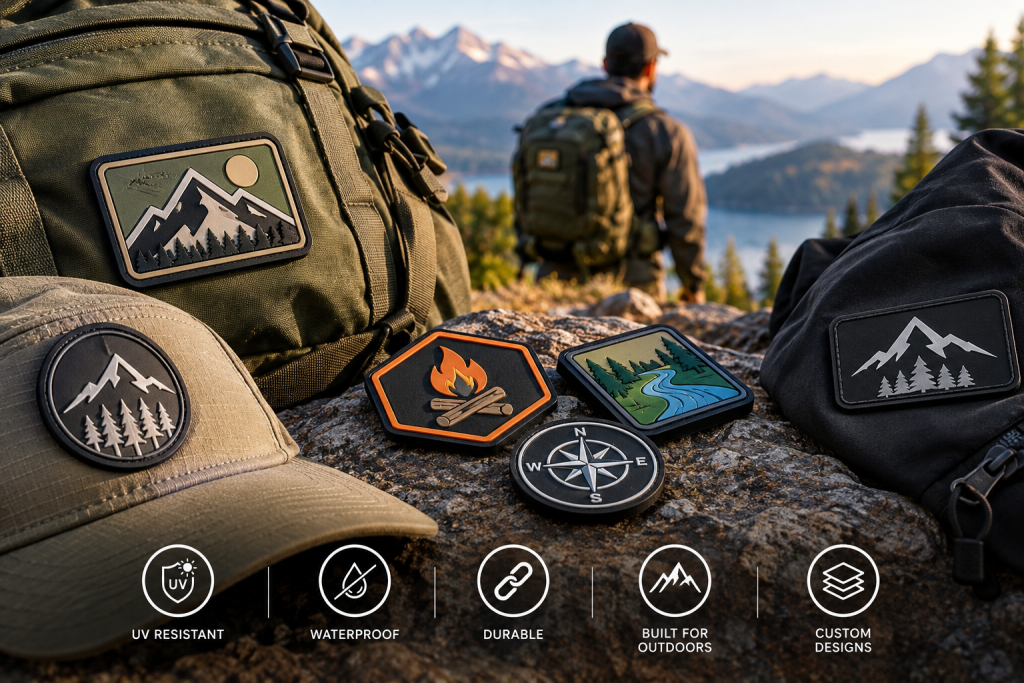
PVC patches are available in various shapes, sizes, colours, and attachment styles. They can display company logos, outdoor-themed artwork, mountain illustrations, club emblems, equipment labels, slogans, and other graphics.
Their construction makes them particularly suitable for equipment that regularly encounters moisture, dirt, friction, and frequent handling.
For example, a hiking equipment company could use a molded PVC logo on its backpacks, while a camping club could create custom patches featuring its emblem and establishment year. Both designs would provide a recognisable identity while offering a practical alternative to traditional stitched badges.
1. Excellent Resistance to Outdoor Weather Conditions
One of the biggest reasons to choose custom PVC patches is their ability to handle moisture.
Outdoor equipment can be exposed to rain, damp grass, snow, splashes, and humid conditions. Fabric-based patches can absorb moisture, depending on their materials and backing, which may affect drying time and appearance.
PVC itself is water-resistant and does not absorb water like ordinary fabric. This makes it a suitable material for patches attached to equipment frequently used outdoors.
Why Water Resistance Matters
Consider a backpack used during a weekend hiking trip. It may be placed on wet ground, exposed to rainfall, or carried through humid woodland. A PVC patch can resist moisture while maintaining its molded shape and colour.
The same benefit applies to camping bags, rainwear, outdoor uniforms, and equipment pouches.
However, the patch’s performance depends on the complete construction of the product. Stitching, adhesive, hook-and-loop backing, and the fabric underneath may respond differently to prolonged moisture exposure.
For this reason, choosing a suitable attachment method is just as important as selecting PVC.
For outdoor brands that want durable, easy-to-maintain branding, custom PVC patches provide a practical solution for equipment used in changeable weather.
2. Built to Handle Everyday Wear and Tear
Outdoor equipment experiences more friction and handling than many ordinary accessories. Backpacks rub against clothing, bags come into contact with rough surfaces, and jackets are repeatedly folded, packed, and unpacked.
Traditional patches can develop loose threads or frayed edges over time, especially when exposed to frequent abrasion.
PVC patches have a different construction. Because the design is molded rather than stitched from multiple threads, there are no embroidered edges to unravel.
This makes them particularly useful for products that receive regular use.
A Practical Choice for Frequently Used Gear
Custom PVC patches can be applied to suitable backpacks, equipment bags, outdoor jackets, and tactical accessories. Their flexible material can accommodate normal movement without behaving like a rigid metal badge.
Nevertheless, PVC patches are not indestructible. Prolonged abrasion, sharp objects, unsuitable chemicals, excessive heat, and poor attachment can still damage a patch or the material beneath it.
The objective is not to make outdoor equipment immune to damage. It is to choose a patch material that suits the conditions in which the equipment will be used.
For outdoor manufacturers and businesses, this can help maintain a professional appearance throughout regular use.
3. Colours That Make Outdoor Branding Stand Out
A recognisable logo is an important part of an outdoor brand’s identity. Customers may encounter a company through its products, social media, outdoor events, or recommendations from fellow enthusiasts.
Custom PVC patches provide an effective way to display that identity on physical equipment.
Because PVC patches use coloured material within a molded design, they can reproduce bold colour combinations without relying on embroidered thread for every element.
Popular design choices include:
- Black patches with contrasting white logos.
- Earth-toned designs inspired by woodland and mountain environments.
- Green and brown colour combinations for outdoor equipment.
- Bright colours for high-visibility branding.
- Multi-colour emblems for hiking clubs and adventure groups.
- Minimalist logos for premium outdoor products.
Colour selection should reflect both the brand and the intended use.
For example, a minimalist camping brand might choose a charcoal patch with a simple mountain outline. An adventure club might prefer a colourful badge featuring a compass, trail symbol, and club name.
PVC patches can help bring these ideas to life while creating a consistent visual identity across multiple products.
It is worth remembering that no patch material is completely immune to sunlight damage. The quality of the PVC formulation, colour selection, UV exposure, and care all influence long-term appearance.
4. Lightweight and Flexible for Outdoor Equipment
When people prepare for outdoor activities, they often try to minimise unnecessary weight. Hikers, campers, and travellers need equipment that remains practical to carry over long distances.
Custom PVC patches offer a relatively lightweight way to add branding or decorative detail without introducing a bulky metal component.
Their flexible construction also allows them to follow the contours of suitable bags, clothing, and accessories.
Where Flexibility Helps
A patch on the front of a backpack may need to move slightly as the bag changes shape. A patch attached to a jacket sleeve must accommodate normal arm movement.
PVC’s flexibility can make it appropriate for these applications, provided the patch thickness and attachment are suitable for the underlying material.
The design should also be proportional to the product. A small patch on a compact equipment pouch can look balanced and practical, while a larger emblem might suit the front panel of a substantial hiking backpack.
At Patches Maker USA, considering the patch’s intended placement helps you develop a design that complements the equipment instead of overwhelming it.
5. Ideal for Hiking Backpacks and Adventure Bags
Backpacks are among the most useful applications for custom PVC patches.
They are regularly exposed to dirt, moisture, friction, and repeated handling. At the same time, they provide visible surfaces where manufacturers, clubs, and outdoor enthusiasts can display personalised designs.
Custom PVC Patches for Hiking Backpacks
Outdoor equipment brands can use PVC patches to display logos, collection names, or recognisable symbols on backpack front panels.
Hiking groups can create matching patches featuring mountain ranges, trail markers, or their club emblems. Travellers may prefer personalised designs that commemorate a particular expedition or destination.
PVC patches can also complement the rugged appearance of tactical-style backpacks and utility bags.
Before ordering, check the backpack’s material and construction. Some fabrics require reinforcement or a particular sewing method to support an attached patch securely.
Custom Patches for Camping Bags
Camping bags and equipment organisers can benefit from clearly identifiable labels and decorative branding.
For instance, a camping company might use different patch designs for sleeping equipment, cooking accessories, and general storage bags.
A well-planned patch system can create a consistent look across a product collection while helping individual items feel more distinctive.
Whether the objective is commercial branding or personalisation, PVC patches provide an appealing combination of colour, texture, and practicality.
6. A Strong Option for Outdoor Jackets and Outerwear
Outdoor jackets need to balance comfort, weather protection, and freedom of movement. The materials used in their construction may include coated fabrics, waterproof membranes, fleece, nylon, or other specialised textiles.
Custom PVC patches can add branding to suitable jackets without relying on conventional embroidery alone.
Why PVC Patches Work on Outerwear
Their molded surfaces offer a clean, modern finish that can complement technical clothing and outdoor-inspired fashion.
For example, a hiking apparel company might place a small logo patch on the upper sleeve of a jacket. A camping brand could use a distinctive emblem on a utility vest, while an outdoor club could create matching badges for its members.
The main consideration is the garment’s construction.
If a jacket is waterproof, stitching through its outer shell may compromise the fabric’s water-resistant performance unless the seam is properly designed and sealed. Adhesives and heat-based attachment methods can also be unsuitable for some technical fabrics.
Always confirm the manufacturer’s recommendations before applying a patch to specialist waterproof clothing.
Selecting the right patch and attachment method helps preserve the intended performance of the garment.
7. Useful for Tactical Gear and Utility Equipment
Tactical-style equipment often uses modular panels that allow patches to be attached, removed, or replaced as needed.
Custom PVC patches are popular for this style of equipment because they can feature clear symbols, bold lettering, and durable molded designs.
Hook-and-Loop PVC Patches
Hook-and-loop backing, often referred to by the brand name Velcro, allows a patch to attach to a compatible loop panel.
This is particularly useful when users want to change their patch without permanently sewing a new design onto the equipment.
Examples include:
- Personalised equipment identifiers.
- Outdoor team emblems.
- Recreational tactical gear.
- Adventure club badges.
- Custom morale patches.
- Training and event identification.
A hook-and-loop PVC patch generally includes a compatible attachment layer. Before ordering, make sure the equipment has a suitable loop panel and that the backing is designed for the intended application.
For outdoor groups, this removable format can make it easier to share a consistent design across bags, vests, and other compatible equipment.
8. Custom PVC Patches Allow Creative Design Freedom
Outdoor brands often want designs that reflect the experiences and environments associated with their products.
A standard embroidered badge can provide a classic appearance, but PVC patches open up additional possibilities through molding and layered construction.
2D PVC Patches
Two-dimensional PVC patches use defined, relatively flat layers to create a clear design. They work well for logos, simple illustrations, lettering, and geometric shapes.
This option can be suitable when readability and a straightforward appearance are priorities.
3D PVC Patches
Three-dimensional PVC patches use raised elements to add depth to selected parts of the design.
For example, a mountain illustration could feature raised peaks, while the brand name remains on a flatter section. A compass design might use layered elements to create a more tactile appearance.
These features can help an outdoor logo stand out from the surface of a backpack or jacket.
Custom Shapes and Borders
PVC patches can be produced in a range of shapes, depending on the artwork and manufacturing requirements.
Common options include circular badges, rectangular labels, shield shapes, mountain silhouettes, and custom outlines based on a brand logo.
Borders can be integrated into the molded design rather than created through traditional embroidered edging.
For outdoor products, a clear shape and well-balanced layout often work better than excessive detail. The finished patch should remain recognisable at the size where it will actually be used.
9. PVC Patches vs Embroidered Patches for Outdoor Gear
Choosing between PVC and embroidery depends on the appearance you want and the conditions the patch must handle.
Both materials have useful applications, but their construction differs significantly.
| Feature | Custom PVC Patches | Embroidered Patches |
|---|---|---|
| Construction | Molded PVC material | Stitched threads on fabric |
| Water resistance | PVC material resists water | Depends on thread and backing |
| Edge durability | No embroidered threads to fray | Edges may fray if damaged |
| Surface | Smooth, textured, or raised | Textured, stitched finish |
| Design effects | Molded layers and raised details | Flat or raised stitching effects |
| Cleaning | Often easy to wipe clean | Depends on fabric and thread |
| Visual style | Modern and rubber-like | Traditional and textile-based |
| Suitable uses | Outdoor gear, utility bags, tactical-style equipment | Apparel, clubs, uniforms, and classic branding |
When PVC Is the Better Choice
PVC is often a practical option when a patch needs to handle moisture, regular cleaning, and frequent handling.
It is particularly useful for technical-looking designs, raised graphics, and equipment exposed to outdoor conditions.
When Embroidery May Be Better
Embroidered patches are ideal when you want a traditional stitched appearance, visible thread texture, or a design that complements fabric-based clothing.
They can be particularly attractive on casual apparel, denim jackets, caps, and products where a textile finish is part of the overall aesthetic.
Neither option is universally superior. Consider the material, expected conditions, design requirements, and attachment method before deciding.
10. Easy Maintenance After Outdoor Adventures
Outdoor equipment rarely stays perfectly clean. Mud, dust, soil, and everyday grime can accumulate during hiking trips, camping weekends, and outdoor work.
One advantage of custom PVC patches is their relatively simple cleaning process.
Because the PVC surface does not absorb water like fabric, dirt can often be removed with a soft damp cloth.
Basic PVC Patch Care
- Remove loose dirt using a soft brush or cloth.
- Wipe the patch gently with clean water.
- If needed, use a small amount of mild soap that is suitable for the material.
- Remove soap residue with a clean, damp cloth.
- Allow the patch to dry naturally.
Avoid abrasive cleaning pads, harsh solvents, and excessive heat. These can damage the surface, colours, adhesive, or backing.
The care requirements of the complete item also matter. A patch attached to a waterproof backpack, technical jacket, or specialised bag should be cleaned according to the product manufacturer’s instructions.
Easy maintenance is especially valuable for outdoor equipment that is used repeatedly and needs to remain presentable without complicated cleaning procedures.
11. Custom PVC Patches for Outdoor Brands and Businesses
PVC patches are not limited to personal hiking equipment. They can also support branding strategies for companies that manufacture, sell, or promote outdoor products.
Outdoor Clothing Brands
Clothing businesses can use PVC patches to create distinctive branding on jackets, utility vests, caps, and accessories.
A consistent patch design across multiple products can help customers recognise the brand and create a unified product collection.
Camping Equipment Manufacturers
Camping equipment companies can use patches on selected bags, organisers, and accessories to identify product lines or display company logos.
A carefully designed patch can contribute to the overall appearance of the product while remaining practical for everyday use.
Hiking Clubs and Adventure Groups
Clubs can create patches featuring their names, logos, or outdoor-themed illustrations.
These badges can become part of a group’s identity, particularly when members use matching backpacks, jackets, or compatible hook-and-loop equipment.
Outdoor Events and Merchandise
Organisers of camping events, hiking meetups, adventure races, and outdoor festivals can use custom PVC patches as merchandise or commemorative items.
Designs might include the event name, date, location, or a distinctive illustration associated with the occasion.
For businesses, custom patches offer a way to extend branding beyond websites and advertising into physical products that customers can continue using.
12. How to Design PVC Patches for Outdoor Use
A successful PVC patch needs more than an attractive logo. It should also be suitable for its intended location, readable at the chosen size, and compatible with the attachment method.
Start With a Clear Design
Choose a logo or illustration that communicates your brand identity without unnecessary complexity.
For smaller patches, simplify tiny lettering and very thin lines where possible. Clear shapes and suitable spacing generally produce a more readable result.
Select Appropriate Colours
Choose colours that complement the gear and provide enough contrast for the logo to remain visible.
Outdoor-inspired colours such as olive, charcoal, tan, navy, and black can work well with many equipment designs. Brighter accent colours can add visibility and personality.
Decide Between Flat and Raised Details
A flatter design may be appropriate for straightforward logos, while raised details can give selected elements more depth.
Think about how the patch will look from a normal viewing distance, rather than relying only on a close-up digital image.
Choose the Right Size
A patch should suit the available surface.
A small emblem may work well on a jacket sleeve, while a backpack front panel can accommodate a larger design.
Measure the intended placement before finalising the artwork, and account for seams, pockets, straps, and curved surfaces.
Confirm the Attachment Method
The backing should suit both the patch and the equipment.
A sewn attachment can provide a permanent solution for suitable fabrics. Hook-and-loop backing is useful when patches need to be removed or exchanged. Adhesive options may be suitable for some applications but require careful compatibility checks.
Taking these steps before production can help prevent sizing, readability, and attachment problems.
13. Choosing the Right Backing for Outdoor PVC Patches
The backing is an important part of a patch because it determines how the patch attaches to the equipment.
The best option depends on the surface material, expected use, and whether the patch should be removable.
Sew-On Backing
Sew-on attachment is suitable for many fabric items when a permanent connection is desired.
It can be useful for backpacks, jackets, equipment bags, and other products with compatible construction.
However, stitching can create holes in waterproof or coated materials, so the item’s construction should be checked first.
Hook-and-Loop Backing
Hook-and-loop backing allows users to remove and replace a patch when the equipment has a compatible loop panel.
It is useful for modular gear, recreational tactical equipment, and outdoor accessories that benefit from interchangeable designs.
Adhesive Backing
Adhesive backing may work for selected surfaces and temporary applications, depending on the adhesive and environmental conditions.
It should not automatically be assumed suitable for heavy outdoor use. Moisture, heat, dirt, surface texture, and repeated flexing can affect the bond.
Discuss your intended use with your supplier before choosing an attachment method. A durable PVC patch will only perform as expected if it is securely attached to a compatible surface.
14. How to Order Custom PVC Patches From Patches Maker USA
Ordering custom patches is easier when you prepare your requirements before requesting a quote.
At Patches Maker USA, you can begin by identifying the purpose of your patches and the type of equipment where they will be used.
Step 1: Define Your Purpose
Decide whether you need patches for hiking backpacks, camping equipment, outdoor clothing, business branding, or club merchandise.
This helps determine the design, material requirements, and attachment method.
Step 2: Prepare Your Artwork
Provide your logo or design in a clear digital format.
If your artwork includes small text, intricate illustrations, or multiple layers, ask whether any adjustments are needed to make the molded design practical.
Step 3: Choose the Dimensions
Specify the approximate width and height of the patch.
Consider the available placement area and the amount of detail needed to communicate your design.
Step 4: Select Colours and Effects
Choose your preferred colours and decide whether you want a flat 2D appearance or raised 3D elements.
A simple design can be just as effective as a complex one when the colours and proportions are carefully considered.
Step 5: Select the Backing
Explain how the patch will be attached and whether it needs to be removable.
The correct backing will depend on the gear material and the conditions in which the patch will be used.
Step 6: Review the Design Proof
Before approving production, carefully check the artwork, lettering, dimensions, colours, and placement.
Confirming these details early helps ensure the final product reflects your expectations.
For bulk orders, ask about available quantities, production timelines, delivery options, and pricing before confirming the order.
15. Are Custom PVC Patches Worth the Investment?
The value of a custom PVC patch depends on how it will be used and what you expect it to achieve.
For an outdoor equipment manufacturer, a durable patch can help maintain a consistent brand appearance on products that experience frequent handling.
For a hiking club, a personalised patch can create a shared identity among members. For an outdoor clothing brand, it can contribute to the product’s design and help distinguish the collection from competing styles.
PVC patches may also reduce some common problems associated with thread-based construction, such as fraying and unraveling.
However, the total value depends on the complete product. Patch size, molded complexity, order quantity, backing, and manufacturing requirements can all affect the price.
When comparing suppliers, consider the quality of the design, material suitability, attachment method, and expected use rather than selecting an option based on price alone.
A well-planned custom patch can offer both practical functionality and lasting visual value for outdoor equipment.
Conclusion: Why Custom PVC Patches Are Perfect for Outdoor Gear
Outdoor gear needs to withstand regular use while remaining practical and visually appealing. From hiking backpacks and camping bags to jackets, utility pouches, and outdoor merchandise, the right patch can provide a distinctive finishing touch.
Custom PVC patches are an excellent option for outdoor gear because they combine water-resistant material, flexible construction, clean edges, easy maintenance, and versatile design possibilities.
Their molded construction makes them particularly useful for equipment that experiences moisture, dirt, and frequent handling. Raised details and bold colour combinations also help brands create recognisable designs that suit modern outdoor products.
At the same time, choosing the right patch requires careful attention to the intended use, size, artwork, and attachment method. Waterproof material alone does not guarantee that every backing or application will perform well in every environment.
At Patches Maker USA, custom PVC patches provide an opportunity to turn your logo or artwork into a practical, distinctive badge for outdoor equipment, business merchandise, and adventure-inspired products.
Whether you’re developing a new outdoor brand, creating patches for a hiking group, or personalising equipment for your next adventure, start with a design that reflects your identity and suits the conditions in which it will be used.
Explore custom PVC patches from Patches Maker USA and create a design that brings durability, personality, and professional branding together.
Frequently Asked Questions
1. Why are custom PVC patches suitable for outdoor gear?
Custom PVC patches are made from flexible, water-resistant material that does not fray like embroidered thread. Their molded construction, easy-clean surface, and versatile design options make them suitable for many backpacks, jackets, bags, and outdoor accessories.
2. Are PVC patches waterproof?
PVC material itself is water-resistant and does not absorb water like fabric. However, the patch’s backing, stitching, adhesive, and attachment to the equipment can affect how the complete product performs during prolonged moisture exposure.
3. Can PVC patches be used on hiking backpacks?
Yes. PVC patches are commonly used on suitable backpacks and equipment bags. Sew-on and hook-and-loop attachment methods can both be appropriate, depending on the backpack’s construction and whether you want a permanent or removable patch.
4. Are PVC patches better than embroidered patches for outdoor use?
PVC patches are often preferable when water resistance, easy cleaning, and resistance to fraying are priorities. Embroidered patches may be better when a traditional textile appearance is important. The best option depends on the application and design requirements.
5. Can custom PVC patches withstand sunlight?
PVC patches can retain their colours well, but prolonged exposure to direct sunlight may affect their appearance over time. Material quality, UV exposure, and care influence long-term colour stability.
6. What is the difference between 2D and 3D PVC patches?
Two-dimensional PVC patches use relatively flat layers to define the design. Three-dimensional patches incorporate raised elements that create depth and texture. Both options can work well for outdoor equipment branding.
7. Which backing is best for outdoor PVC patches?
Sew-on backing can provide a permanent attachment on suitable materials, while hook-and-loop backing is useful for removable patches. Adhesive backing may suit certain applications but should be checked for compatibility with moisture, temperature, and surface conditions.
8. Can PVC patches be used on waterproof jackets?
They may be suitable, but attachment requires care. Sewing can create holes in waterproof fabrics, and adhesives may not be compatible with every coating. Check the jacket manufacturer’s recommendations before applying a patch.
9. Are custom PVC patches easy to clean?
Yes. Dirt can often be removed using a soft damp cloth and mild soap when appropriate. Avoid harsh solvents, abrasive cleaning tools, and excessive heat.
10. Can I customise PVC patches with my company logo?
Yes. Custom PVC patches can feature logos, lettering, symbols, multiple colours, and raised details, subject to practical design and manufacturing limitations. A clear design file helps the manufacturer prepare an accurate proof.
11. Are custom PVC patches suitable for outdoor clothing brands?
Yes. They can provide distinctive branding for outdoor jackets, utility vests, caps, backpacks, and accessories. Their appearance works particularly well with technical, rugged, and contemporary outdoor product designs.
12. How do I order custom PVC patches from Patches Maker USA?
Prepare your artwork, approximate dimensions, colour preferences, order quantity, and intended application. Then discuss the available design and backing options with Patches Maker USA, review the proof, and confirm the specifications before production.</