Custom patches are a versatile way to showcase a business logo, represent an organisation, personalise clothing, and create branded merchandise. However, choosing the right artwork, fabric, and colours is only part of the design process. The border around a patch also plays an important role in its appearance, durability, and overall finish.
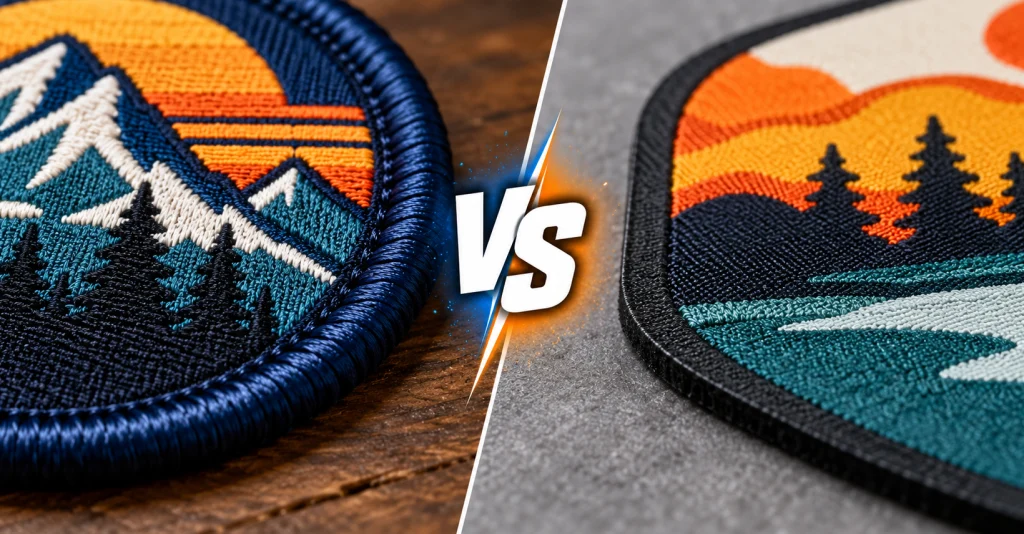
Two of the most common options are Merrow borders and heat-cut borders. Both can produce professional-looking custom patches, but they are designed for different styles and requirements. A Merrow border creates a raised, rounded edge that gives a patch a traditional embroidered appearance. A heat-cut border uses heat to seal the material around the design, allowing for a flatter and more precise outline.
So, which option should you choose for your next custom patch order?
The answer depends on your patch design, material, shape, intended application, and preferred appearance. In this guide, Patches Maker USA explains how Merrow and heat-cut borders work, their main differences, their advantages, and how to choose the right finish for your project.
What Is a Merrow Border on a Custom Patch?
A Merrow border is a thick, rounded edge created by wrapping stitching around the outside of a patch. This stitching secures the edge while producing a raised, finished appearance.
Merrow borders are commonly associated with traditional embroidered patches. They are particularly popular for military-style insignia, uniform patches, club badges, organisation logos, and designs with conventional shapes.
The border usually extends slightly beyond the patch’s main design, creating a clearly defined outline. It can be made in a colour that matches the patch background or contrasts with the artwork to make the design more noticeable.
How Is a Merrow Border Made?
A Merrow-style edge is produced using specialised overlocking equipment. The stitching wraps around the patch’s perimeter, helping secure the outer edge and creating its characteristic rounded finish.
The manufacturing process generally involves the following steps:
- Preparing the patch artwork: The design is reviewed to establish its size, shape, colours, and finishing requirements.
- Creating the patch base: The patch is embroidered or constructed from the selected material.
- Cutting the outline: The patch is prepared in the required shape before the border is applied, depending on the manufacturing process.
- Applying the Merrow stitching: The thread is wrapped around the perimeter to form a continuous, raised edge.
- Inspecting the finished patch: The border and overall design are checked for consistency and quality.
The precise production sequence may vary according to the patch material and manufacturing method.
Key Characteristics of Merrow Borders
Merrow borders are recognised for several distinctive features:
- Raised appearance: The thick stitching creates a noticeable edge around the patch.
- Traditional finish: The style works particularly well with classic embroidered designs.
- Defined outline: The border separates the patch from the garment or item underneath.
- Rounded edges: The stitching produces a smooth, cord-like perimeter.
- Colour coordination: Border thread can complement the artwork or create a contrasting outline.
Merrow borders are especially effective when the patch design has a simple, regular outline and the raised edge is part of the desired look.
What Is a Heat-Cut Border on a Custom Patch?
A heat-cut border is created by cutting the patch material with a heated cutting tool that seals the edge during the process. This technique can help prevent fraying in suitable synthetic materials while allowing the manufacturer to follow detailed outlines.
Unlike a Merrow border, a heat-cut finish does not rely on thick overlocked stitching around the perimeter. The result is generally flatter and more closely follows the shape of the artwork.
Heat-cut borders are commonly considered for patches with irregular outlines, intricate shapes, narrow sections, or designs where a bulky edge would interfere with the intended appearance.
However, the suitability of heat cutting depends on the material being used. Not every fabric or patch construction is appropriate for this method, so the material should be confirmed with the manufacturer before production.
How Is a Heat-Cut Border Made?
Although production details vary, the general process involves preparing the patch and cutting its outline using a heated tool.
The typical steps include:
- Reviewing the artwork: The design is checked for sharp corners, curves, narrow sections, and intricate details.
- Selecting suitable materials: The manufacturer determines whether the chosen patch material can be safely and effectively heat-cut.
- Preparing the patch: The design is embroidered, woven, printed, or otherwise constructed according to the product specification.
- Cutting the perimeter: A heated blade or suitable cutting system follows the required outline.
- Checking the edges: The finished patch is inspected for clean cuts, consistent shape, and appropriate edge sealing.
The exact method will depend on the construction of the patch and the equipment used by the manufacturer.
Key Characteristics of Heat-Cut Borders
Heat-cut borders offer several practical benefits:
- Flatter finish: The edge generally has less bulk than a traditional Merrow border.
- Shape flexibility: The outline can follow irregular designs and detailed silhouettes.
- Clean appearance: The cut can closely match the artwork’s intended perimeter.
- Suitable for detailed shapes: Heat cutting can be useful where a thick stitched edge would cover or distort small design elements.
- Material-dependent sealing: Suitable synthetic materials can have their edges sealed during cutting.
Heat-cutting is not automatically better for every detailed design. The final result still depends on the artwork, the material, the cutting method, and the manufacturer’s capabilities.
Merrow vs Heat-Cut Borders: The Main Differences
Both border styles can produce professional custom patches, but they serve different design purposes. Understanding their differences makes it easier to choose a finish that suits your project.
1. Appearance and Overall Style
The most obvious difference is how each border looks.
A Merrow border creates a raised, rounded edge that gives the patch a classic embroidered appearance. It adds a visible frame around the design and can make a simple logo look more structured.
A heat-cut border creates a flatter perimeter that follows the patch’s outline more closely. Because it does not use the same thick overlocked stitching, the result can appear cleaner and less bulky.
Choose a Merrow border if you want a traditional, substantial edge.
Choose a heat-cut border if you prefer a flatter finish that follows a custom silhouette.
2. Shape and Design Flexibility
Patch shape is one of the most important factors in this decision.
Merrow borders are generally best suited to conventional shapes, including circles, ovals, squares, rectangles, and other outlines that can accommodate the thicker stitching.
Heat-cut borders are often better suited to irregular shapes, such as logos with protruding elements, distinctive silhouettes, and custom outlines.
For example, a round embroidered badge with a central emblem may look excellent with a Merrow border. A patch shaped around a company mascot or a complex logo may benefit from heat cutting because the perimeter can follow the artwork more closely.
That does not mean every complex shape must use heat cutting. The manufacturer should review the actual artwork to determine whether the outline is feasible.
3. Edge Thickness
Merrow borders create a visibly raised perimeter. This thickness can make the patch feel more substantial and help distinguish it from the garment.
Heat-cut edges are generally thinner and flatter, making them useful when a bulky outline would interfere with small details or the intended shape.
The right choice depends on the design. A thick edge can be a desirable visual feature on a traditional badge, while a flatter edge may work better for a modern, intricate logo.
4. Durability and Edge Protection
Both border types can produce durable patches when they are manufactured correctly and used with appropriate materials.
Merrow stitching physically wraps around the perimeter, providing a stitched finish that can help secure the patch edge.
Heat cutting seals the edges of suitable synthetic materials, helping reduce fraying. However, the quality of the seal depends on the fabric composition, cutting temperature, equipment, and workmanship.
Neither method guarantees that a patch will last indefinitely. Frequent washing, abrasion, exposure to weather, attachment quality, and the underlying patch material all affect its lifespan.
For workwear, uniforms, outdoor equipment, or frequently handled items, consider the complete patch construction rather than choosing based on the border alone.
5. Comfort and Bulk
A Merrow border has more thickness than a typical heat-cut edge. On some garments, this added structure is beneficial because it creates a firm, defined perimeter.
For lightweight clothing or designs with narrow sections, a flatter heat-cut edge may be preferable. It can reduce the visual and physical bulk around the patch.
The difference may be minor on a large jacket patch but more noticeable on small designs or lightweight garments.
6. Small Details and Intricate Outlines
If your design contains fine lettering, narrow projections, or a complicated external shape, the border should not overpower the artwork.
A Merrow border occupies space around the perimeter and may not be suitable for every narrow or sharply detailed outline.
Heat cutting can offer greater freedom when following a detailed outer silhouette, although extremely fine points and tiny sections still require careful design and production review.
It is also important to distinguish the patch’s outer shape from the details inside it. A heat-cut border does not automatically improve the clarity of small text or intricate internal artwork. Those elements depend on the patch-making method, scale, thread or print resolution, and artwork preparation.
7. Colour and Visual Contrast
Both options can contribute to the patch’s overall colour scheme, but they do so differently.
With a Merrow border, contrasting thread creates a prominent frame. For example, a black patch with a white stitched edge can produce a bold, traditional appearance.
With a heat-cut border, the emphasis is on the shape and the edge itself rather than a thick band of border stitching. This can help maintain the intended outline of a colourful or irregular design.
Your choice should support the logo rather than compete with it. If the artwork already has several colours and strong outlines, a simpler edge may be more appropriate. If the design needs a clear frame, a Merrow border may be the better fit.
8. Cost Considerations
There is no universal rule that one border style is always cheaper.
The final price of custom patches depends on several factors, including:
- Patch dimensions
- Quantity ordered
- Material and construction
- Number of colours
- Embroidery or other production requirements
- Shape complexity
- Backing type
- Special finishing and quality-control requirements
A straightforward Merrow-edged patch may be efficient to produce, while a complicated heat-cut design may require additional artwork preparation or cutting considerations. In other cases, the preferred material or construction may influence which method is most practical.
The best approach is to request a quote based on your actual artwork, dimensions, quantity, and intended use. This allows the manufacturer to recommend a suitable border without relying on assumptions about price.
Merrow vs Heat-Cut Borders Comparison Table
The following table summarises the general differences between the two finishes.
| Feature | Merrow Border | Heat-Cut Border |
|---|---|---|
| Appearance | Raised and rounded | Generally flat and precise |
| Edge construction | Overlocked stitching | Heated cutting and edge sealing where suitable |
| Typical style | Traditional and structured | Modern and shape-focused |
| Common shapes | Circles, ovals, squares and rectangles | Irregular and custom outlines |
| Edge thickness | More substantial | Usually less bulky |
| Detailed outer shapes | May be limited by border width | Often more flexible |
| Fraying control | Stitched perimeter | Sealed edge on suitable materials |
| Best design approach | Bold, conventional outlines | Custom silhouettes and intricate perimeters |
| Material suitability | Depends on patch construction | Depends on heat compatibility |
| Best selection method | Match the border to the design | Match the cutting method to the material and outline |
These are general guidelines rather than absolute rules. Manufacturing capabilities and the selected patch material can affect the result.
When Should You Choose a Merrow Border?
A Merrow border is an excellent option when you want a classic patch finish with a prominent, stitched outline.
Military-Style and Organisation Patches
Traditional insignia and organisation badges often benefit from a raised border that gives the patch a defined shape. The finished edge can help the design stand out on uniforms, jackets, bags, and other items.
Specific uniform requirements should always take priority over appearance alone.
Company and Work Uniforms
Businesses that use embroidered logos on uniforms may prefer Merrow borders for designs with conventional shapes. The visible stitching creates a familiar badge-style appearance suitable for many workplace applications.
For company uniforms, consider whether the border colour matches the brand guidelines and whether the patch will be attached to lightweight or heavy-duty fabric.
Clubs, Teams, and Associations
Club badges, team emblems, and membership patches often use bold outlines to make their designs easy to recognise.
A Merrow border can help frame the artwork and provide a consistent look across a collection of patches. It works especially well for circular and rectangular designs.
Traditional Embroidered Designs
If you want a patch to have a classic embroidered look, the raised border can complement the texture of the stitching.
This is particularly useful when the patch artwork contains large letters, simple shapes, and strong colour contrasts.
When Should You Choose a Heat-Cut Border?
Heat-cut borders are worth considering when your design needs a precise outline or when a thick stitched edge would interfere with the desired shape.
Irregular Logo Shapes
Some business logos cannot be placed neatly inside a circle or rectangle without changing their appearance. Heat cutting can allow the patch perimeter to follow a distinctive silhouette.
For example, a logo shaped like an animal, object, or custom symbol may look more natural when the outer edge follows the artwork.
Modern Brand Merchandise
Brands creating contemporary merchandise may prefer a clean outline with less visible bulk around the patch.
A heat-cut finish can support this style when the material and patch construction are suitable.
Small or Narrow Designs
When the design includes narrow projections or a compact outline, a thick Merrow border may occupy too much of the available space.
A heat-cut border can help preserve the intended silhouette, provided the narrow sections are practical to manufacture and durable enough for the intended use.
Patches With Complex Perimeters
A design with multiple curves, uneven edges, or non-standard geometry may be easier to finish using a heat-cut method.
Before production, the artwork should be reviewed to make sure that the outline can be cut cleanly and that the material will retain a suitable edge.
Can Every Custom Patch Have a Heat-Cut Border?
No. Heat cutting depends on the material and the way the patch is constructed.
Some synthetic fabrics can be heat-cut because their edges can be sealed during the process. Other materials may scorch, deform, discolour, or fail to seal correctly when exposed to heat.
Natural fibres and certain specialist materials may require a different finishing method. Likewise, a patch that uses multiple layers or a particular backing may have manufacturing limitations.
For this reason, it is important not to select a border based only on a picture or a general description.
Before placing an order, ask your patch manufacturer to confirm:
- Whether the patch material is suitable for heat cutting
- Whether the design’s narrow points can be produced reliably
- Whether the edge will be sealed adequately
- Whether the chosen backing affects the finishing process
- Whether a Merrow border would provide a more suitable alternative
A professional review helps prevent avoidable production issues and ensures that the final finish matches the intended design.
Which Border Is Better for Embroidered Patches?
Both Merrow and heat-cut borders can be suitable for embroidered patches. The better choice depends on the design’s shape and the look you want.
Merrow borders are particularly effective for conventional embroidered patches because the thick stitching complements the embroidered texture. They also create a clear outer frame that works well for simple badges and traditional logos.
Heat-cut borders may be more appropriate for embroidered designs with irregular outlines. They can follow a custom silhouette without adding a wide band of overlocking around the perimeter.
For example, consider two patches carrying the same company logo. A circular version may look balanced with a Merrow border, while a version cut closely around the logo’s silhouette may be better suited to heat cutting.
The important consideration is whether the border complements the patch rather than restricting its design.
Which Border Is Better for Woven Patches?
Woven patches are commonly chosen for designs with fine lines, small lettering, and intricate details. Their construction uses woven threads to form the design rather than relying solely on the raised stitching typical of embroidered patches.
For woven patches, a heat-cut edge may be useful when the design requires a close-fitting or irregular outline and the fabric is compatible with heat cutting.
A Merrow border may also be possible for suitable woven patch designs, particularly when the shape is simple and a traditional raised edge is desired.
However, the choice should take account of the woven fabric, the size of the patch, and the amount of space required for the border. Ask the manufacturer to confirm which finish will preserve the artwork and provide an appropriate edge.
What About PVC and Printed Patches?
PVC patches use moulded synthetic material, so their edges are generally formed as part of the moulding process rather than finished with a conventional Merrow or heat-cut border.
Printed patches may use a range of fabric and backing combinations, meaning the appropriate edge treatment depends on the specific construction.
A printed design on a suitable synthetic base might accommodate heat cutting, while another construction could require stitching or a different finishing technique.
It is best not to assume that the same border options apply to every patch type. When requesting a quote, specify whether you want an embroidered, woven, PVC, or printed patch so the manufacturer can recommend compatible finishing options.
How Patch Size Affects Your Border Choice
Patch size can change how a border looks and how much of the design remains visible.
On a large patch, a Merrow border can provide a strong frame without taking up too much of the overall design area. On a very small patch, the same border may occupy a larger proportion of the available space.
Heat-cut edges can help preserve the outer silhouette of compact designs, but they do not remove all size limitations. Tiny text, narrow gaps, and delicate projections may still be difficult to manufacture reliably.
Before finalising your artwork, consider the following:
- Small patches: Keep text and fine details simple, and check how much room the border requires.
- Medium patches: Balance the size of the outline with the logo’s proportions.
- Large patches: Consider whether a raised border enhances the design or makes it appear too heavy.
- Irregular shapes: Check whether all narrow sections can be cut and finished reliably.
If the patch is intended for a cap, sleeve, pocket, or another compact area, request a mock-up at the actual size. A design that looks clear on a computer screen may need adjustments when produced as a physical patch.
How to Choose the Right Border for Your Business
For businesses ordering custom patches, the border is more than a decorative detail. It contributes to brand presentation and affects how the logo appears on finished merchandise.
Use these steps to make a more informed choice.
Step 1: Review Your Logo
Look at the outer shape of your logo. If it is circular, square, or rectangular, a Merrow border may be a natural fit. If it has an irregular silhouette, consider whether heat cutting could reproduce it more accurately.
Step 2: Identify the Desired Appearance
Decide whether you want a traditional embroidered badge or a flatter, more closely shaped finish.
The best option should reinforce your brand’s visual identity and suit the garment or product where the patch will be used.
Step 3: Confirm the Patch Material
Material compatibility is particularly important for heat-cut borders. Ask whether the chosen fabric and backing can withstand the cutting process and produce a clean edge.
Step 4: Consider the Intended Use
A patch for a display item may have different requirements from one used on workwear, outdoor gear, bags, or frequently washed clothing.
Consider abrasion, laundering, exposure to moisture, and the way the patch will be attached.
Step 5: Request a Sample or Digital Mock-Up
A digital mock-up can help you evaluate the border’s proportions and colour. A physical sample is more useful when you need to assess texture, thickness, edge quality, and overall construction.
For larger orders, confirming the specifications before production can reduce the risk of receiving patches that do not match your expectations.
Step 6: Compare Complete Quotes
Do not compare border costs in isolation. Review the complete quotation, including patch size, quantity, material, backing, artwork preparation, production, and shipping.
This makes it easier to evaluate the overall value and select a finish that meets your needs.
Common Mistakes to Avoid When Selecting a Patch Border
Even a well-designed logo can lose some of its impact if the border is poorly matched to the patch.
Choosing a Border Without Checking the Shape
A thick Merrow border may not be suitable for every intricate outline. Conversely, a heat-cut finish may not deliver the raised, traditional appearance you want.
Always review the actual perimeter before making your choice.
Ignoring Material Compatibility
Heat cutting is not appropriate for every material. Choosing it without checking the fabric can lead to damaged edges or an unsuitable finish.
Confirm the recommended construction with your manufacturer.
Making the Border Too Prominent
The border should support the design rather than overwhelm it. On small patches, a thick edge can reduce the available space for the artwork.
Check the proportions at the final production size.
Assuming One Finish Is Always More Durable
Durability depends on the complete patch construction, including material, edge treatment, attachment, and intended use.
A properly made Merrow-edged patch and a properly made heat-cut patch can both perform well when selected for suitable applications.
Overlooking Attachment and Care Requirements
The border does not determine whether a patch should use iron-on, sew-on, adhesive, or hook-and-loop backing.
Choose the attachment method separately, based on the garment, surface, and expected use. Follow the manufacturer’s care instructions to help maintain the patch over time.
How to Order Custom Patches With the Right Border
Ordering custom patches is easier when you have your specifications ready.
At PatchesMakerUSA, customers can prepare for a quote by identifying the main details of their project. Providing clear information helps the manufacturer assess the design and recommend an appropriate finish.
Before requesting your custom patches, prepare the following:
- Artwork: Supply your logo or design in the best available quality.
- Dimensions: Specify the desired width and height.
- Quantity: Estimate how many patches you need.
- Patch type: Identify whether you want embroidered, woven, PVC, or printed patches.
- Border preference: State whether you prefer a Merrow or heat-cut finish.
- Backing: Choose a suitable attachment option for your intended application.
- Usage: Explain whether the patches are intended for uniforms, merchandise, bags, outdoor equipment, or another purpose.
If you are uncertain about the border, share your artwork and explain how the patches will be used. A manufacturer can then review the design and suggest a suitable construction.
The goal is not simply to choose the most attractive border in isolation. It is to create a patch that looks right, suits its intended purpose, and can be produced reliably.
Frequently Asked Questions
1. What is the main difference between Merrow and heat-cut borders?
A Merrow border uses overlocked stitching to create a raised, rounded edge. A heat-cut border uses a heated cutting method to create a flatter outline and seal suitable materials. The main differences are appearance, edge thickness, shape flexibility, and material compatibility.
2. Are Merrow borders more durable than heat-cut borders?
Not in every situation. Merrow stitching provides a stitched perimeter, while heat cutting can seal the edges of compatible synthetic materials. Overall durability depends on the fabric, construction, workmanship, attachment method, and conditions of use.
3. Are heat-cut borders better for custom-shaped patches?
They are often a good option for irregular or detailed outlines because the cutting process can follow the design more closely. However, very narrow sections may still present manufacturing challenges, and the material must be suitable for heat cutting.
4. Can I use a Merrow border on a circular patch?
Yes. Circular patches are among the most common applications for Merrow borders. The rounded stitching can create a consistent frame around the design.
5. Do heat-cut borders prevent fraying?
Heat cutting can seal the edges of suitable synthetic materials and help reduce fraying. The effectiveness depends on the material and manufacturing process. Not all fabrics can be heat-cut successfully.
6. Which border is best for company logo patches?
It depends on the logo. A conventional logo inside a circle or rectangle may work well with a Merrow border. A logo with an irregular silhouette may be better suited to heat cutting. Consider the artwork, material, garment, and desired appearance together.
7. Can both border types be used on embroidered patches?
Both may be possible, depending on the design and construction. Merrow borders are common on traditional embroidered patches, while heat cutting may be suitable for embroidered patches that need an irregular outline and use compatible materials.
8. Does border selection affect the price of custom patches?
It can, but there is no universal price difference. The final cost depends on patch dimensions, quantity, material, shape complexity, backing, production requirements, and shipping. Request a quotation based on your exact specifications.
9. Which border should I choose for patches used outdoors?
Consider the complete patch construction, not just the border. Material selection, edge quality, attachment method, moisture exposure, sunlight, abrasion, and cleaning requirements can all affect outdoor performance. Ask your manufacturer to recommend a suitable combination.
10. Can I get advice before ordering custom patches?
Yes. Share your artwork, desired size, quantity, patch type, backing preference, and intended use with your manufacturer. If you are unsure whether Merrow or heat cutting is appropriate, ask for a recommendation based on your specific design.
Final Thoughts
Choosing between Merrow and heat-cut borders comes down to finding the right balance between appearance, shape, material, and intended use.
Merrow borders are an excellent choice for traditional embroidered patches that need a raised, rounded outline. They work especially well with conventional shapes, uniform badges, club patches, and bold logos.
Heat-cut borders are worth considering for patches that need a flatter finish or a perimeter that follows a more complex silhouette. They can offer greater shape flexibility when the material is compatible with heat cutting.
Neither option is universally better. The best border is the one that complements your artwork and performs well for its intended application.
At Patches Maker USA, planning the border alongside the patch material, size, backing, and design can help you achieve a more consistent finished product. Before placing your order, review the artwork at its actual size and confirm that the selected finishing method is suitable for the material.
Whether you are creating branded merchandise, uniform badges, club patches, or custom logo patches, choosing the right border is an important step toward a professional result. Prepare your design, identify your requirements, and request a quote to determine the most suitable finish for your project.