Custom patches are an excellent way to make your brand more recognizable, personalize clothing, and create professional-looking merchandise. Whether you own a clothing company, manage a sports team, run a business, or organize events, the right patch can help communicate your brand identity and make your products stand out.
However, choosing the right type of patch can be challenging. With so many materials and manufacturing techniques available, it is important to understand which option best suits your design, budget, and intended use.
Three of the most popular choices are embroidered patches, woven patches, and PVC patches. Although all three can display your logo, they offer different textures, appearances, durability levels, and design capabilities.
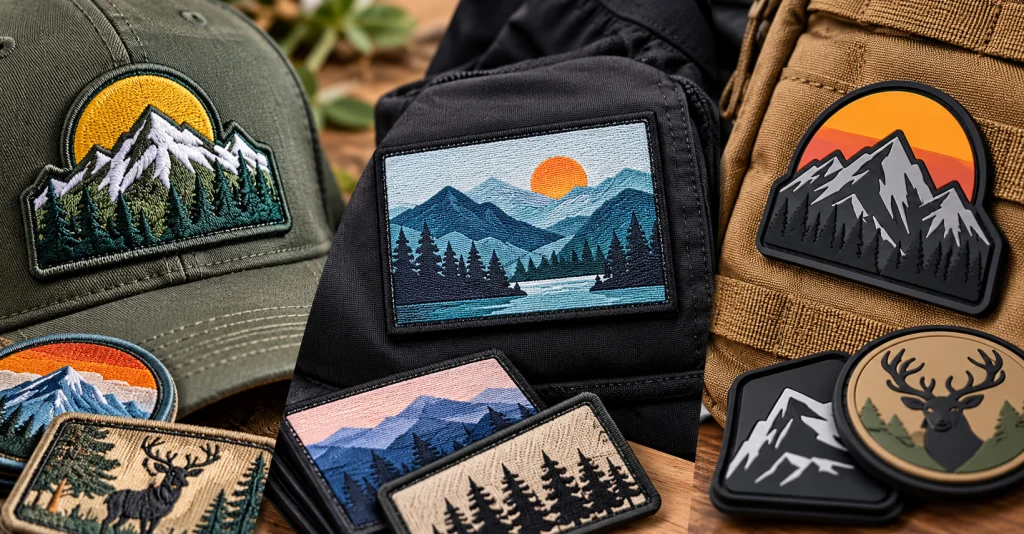
Embroidered patches are known for their traditional stitched texture and raised appearance. Woven patches are ideal for intricate artwork, fine lines, and smaller text. PVC patches offer a modern rubber-like finish, excellent moisture resistance, and a distinctive three-dimensional appearance.
But which option is best for your brand?
In this guide, we will compare embroidered vs woven vs PVC patches, explore their advantages and disadvantages, explain their most suitable applications, and help you make an informed decision for your next custom patch order.
If you are searching for high-quality custom patches for your business, clothing line, uniforms, or promotional products, understanding these differences will help you choose a solution that matches your brand’s needs.
What Are Custom Patches?
Custom patches are personalized fabric or molded emblems featuring a logo, design, symbol, lettering, or other artwork. They can be attached to garments and accessories using different methods, including sewing, heat application, or hook-and-loop fasteners.
Businesses and individuals use custom patches for branding, identification, decoration, and personalization.
For example, a clothing brand might add a woven logo patch to a jacket, while a motorcycle club may prefer an embroidered emblem for its traditional appearance. An outdoor equipment company might choose PVC patches because they perform well in demanding environments.
Custom patches are available in various shapes, sizes, colors, and finishes. The most suitable option depends on your artwork, the product receiving the patch, the environment in which it will be used, and the appearance you want to achieve.
Before placing an order, it helps to understand how each patch type is manufactured and what makes it different.
1. What Are Embroidered Patches?
Embroidered patches are among the most recognizable types of custom patches. They are produced by stitching colored threads onto a fabric base, creating a textured design that stands slightly above the surface.
This traditional manufacturing technique gives embroidered patches a distinctive appearance that works particularly well for logos, badges, lettering, and decorative designs.
The combination of colorful threads and raised stitching makes embroidered patches a popular option for businesses that want their branding to look professional, traditional, and visually appealing.
How Are Embroidered Patches Made?
The manufacturing process begins with digital artwork. The design is converted into an embroidery file that instructs an embroidery machine where to place each stitch.
Colored threads are then stitched onto a suitable fabric backing to reproduce the design. Depending on the artwork, manufacturers may use different stitch types to create outlines, lettering, and filled areas.
The finished patch can be cut into the desired shape and finished with an appropriate border.
Common finishing options include merrowed edges for traditional shapes and heat-cut or laser-cut edges for certain custom designs.
The result is a durable patch with a distinctive stitched texture.
Advantages of Embroidered Patches
1. Classic and Professional Appearance
Embroidered patches have a traditional look that works well for businesses, organizations, and clothing brands. Their raised stitching gives logos a textured appearance that customers can see and feel.
2. Excellent for Bold Logos
Designs featuring large lettering, simple symbols, and clearly defined shapes often work particularly well with embroidery.
The stitching adds depth and helps important design elements stand out.
3. Versatile Applications
Embroidered patches can be used on jackets, uniforms, caps, bags, workwear, backpacks, and other suitable textile products.
Their versatility makes them a practical option for companies that need consistent branding across multiple products.
4. Multiple Backing Options
Depending on the patch construction, embroidered patches can be manufactured with sew-on, heat-seal, or hook-and-loop backing.
The right backing depends on the material of the garment and how frequently the item will be washed or used.
5. A Tactile, Premium Feel
The raised thread creates a textured finish that is difficult to replicate with a flat woven design.
This characteristic makes embroidered patches particularly attractive for brands that want a traditional, handcrafted appearance.
Disadvantages of Embroidered Patches
Despite their advantages, embroidered patches are not ideal for every design.
Fine lettering, extremely thin lines, and intricate details can become difficult to reproduce because embroidery thread occupies more space than the fine threads used in woven patches.
Photographic images and smooth color gradients are also challenging to recreate using conventional embroidery.
Designs may need to be simplified to achieve the best results.
Additionally, embroidered patches are made from fabric and thread, so they are not inherently waterproof. Their long-term performance depends on the materials, construction, attachment method, and conditions of use.
Best Uses for Embroidered Patches
Embroidered patches are especially suitable for:
- Corporate uniforms and employee clothing.
- Sports team badges and club emblems.
- Motorcycle club patches.
- School and organization uniforms.
- Custom jackets and hoodies.
- Baseball caps and promotional headwear.
- Traditional clothing brand logos.
- Event merchandise and commemorative badges.
Best choice: Choose embroidered patches when you want a traditional, textured finish and your design features bold shapes or lettering that can be reproduced clearly with thread.
2. What Are Woven Patches?
Woven patches are manufactured using fine threads woven together on a loom to create the design.
Unlike embroidered patches, where thread is stitched onto a fabric base, woven patches form their artwork through the weaving process itself.
This production method allows manufacturers to reproduce finer details, smaller lettering, and thinner lines than conventional embroidery can typically accommodate.
Woven patches have a smooth, flat surface and a lightweight construction. They are particularly useful for fashion brands and businesses that require detailed logos without the raised texture of embroidery.
How Are Woven Patches Made?
The process begins with a digital design that is prepared for weaving.
Fine threads are arranged and woven together to create the artwork and background. Different thread colors reproduce the shapes, lettering, and other visual elements of the design.
After weaving, the patch is cut to its required dimensions and finished around the edges.
Manufacturers can also provide different backing options, depending on the intended application.
Because the design is woven rather than stitched on top of a base, the finished patch generally has a thinner profile than an embroidered patch.
Advantages of Woven Patches
1. Excellent Detail and Clarity
Woven patches are especially effective for logos containing small lettering, thin outlines, intricate patterns, and closely spaced design elements.
The finer threads allow more detail to be represented within a limited space.
This makes woven patches a strong option for brands that want their logos to remain recognizable at smaller sizes.
2. Smooth and Modern Appearance
Woven patches have a flat surface that creates a clean, understated finish.
This appearance suits contemporary clothing brands, minimalist designs, and products where a bulky or heavily textured patch would be unsuitable.
3. Lightweight Construction
Their relatively thin profile makes woven patches suitable for lightweight clothing and accessories.
They can be used where flexibility and a low-profile finish are important.
4. Suitable for Detailed Brand Logos
Businesses with intricate symbols, small text, or elaborate crests can benefit from woven construction.
For example, a clothing company with a detailed logo may find that a woven patch reproduces the artwork more clearly than an embroidered version of the same size.
5. Professional Textile Finish
Woven patches provide a fabric-based appearance that works well with many types of apparel.
They can be incorporated into jackets, shirts, bags, uniforms, and fashion accessories.
Disadvantages of Woven Patches
The main limitation of woven patches is their lack of raised texture.
If your brand identity depends on thick stitching and a traditional embroidered appearance, woven patches may not deliver the same visual effect.
They also remain textile products rather than waterproof molded emblems. Their resistance to moisture, abrasion, and repeated washing depends on the specific materials and construction.
Although woven patches reproduce fine detail well, extremely complex artwork may still need adjustments to maintain clarity at a small size.
Best Uses for Woven Patches
Woven patches are ideal for:
- Fashion and streetwear brands.
- Detailed clothing logos.
- Small labels and apparel branding.
- Intricate badges and emblems.
- Corporate apparel with fine lettering.
- Lightweight jackets and shirts.
- Promotional merchandise.
- Designs featuring thin lines or small symbols.
Best choice: Choose woven patches when design accuracy, small text, fine lines, and a smooth textile finish are more important than raised texture.
3. What Are PVC Patches?
PVC patches are made from polyvinyl chloride, a flexible synthetic material commonly used to create molded emblems.
Unlike embroidered and woven patches, PVC patches are not made from textile threads. Instead, the design is formed by molding the material into specific shapes, colors, and raised or recessed layers.
This production method gives PVC patches a distinctive rubber-like appearance.
They are particularly popular for outdoor equipment, backpacks, tactical accessories, sports gear, and products that require resistance to moisture and demanding handling.
PVC patches can also be designed with three-dimensional effects, making them a useful option for brands that want their logos to stand out.
How Are PVC Patches Made?
The process begins with artwork that is converted into a design suitable for molding.
A custom mold is prepared to reproduce the patch’s shape and design elements. PVC material is then formed within the mold, with different colors and layers used to create the required appearance.
Depending on the design, manufacturers can produce raised lettering, recessed backgrounds, and layered visual effects.
Once the material has been processed and finished, the patch is ready for its selected backing.
The result is a flexible, molded emblem with a smooth surface and clearly defined design elements.
Advantages of PVC Patches
1. Excellent Water Resistance
PVC patches are highly suitable for products exposed to rain, splashes, mud, and outdoor conditions.
Unlike textile patches, the molded material does not absorb water in the same way as fabric.
This makes PVC a practical option for outdoor accessories and equipment.
However, the patch itself being water-resistant does not automatically make the entire garment or attachment waterproof.
2. Distinctive Three-Dimensional Designs
PVC patches can feature raised and recessed elements that create depth.
This allows brands to produce bold logos with a modern, technical appearance.
The dimensional finish is particularly effective for symbols, icons, lettering, and geometric designs.
3. No Traditional Thread Fraying
Because PVC patches are molded rather than stitched, they do not have embroidered threads that can fray.
Their edges are formed as part of the molding process, allowing for a clean, defined appearance.
4. Easy Maintenance
PVC surfaces can generally be wiped clean when they become dirty.
This makes them useful for equipment and accessories that encounter dust, dirt, and outdoor conditions.
5. Strong Visual Impact
PVC patches can reproduce solid colors and clearly separated design elements.
Their raised appearance makes them stand out on backpacks, tactical equipment, sports accessories, and selected clothing products.
6. Suitable for Hook-and-Loop Applications
PVC patches are often used with hook-and-loop backing, allowing users to attach or remove them from compatible surfaces.
This is particularly useful for bags, equipment panels, and accessories designed for interchangeable patches.
Disadvantages of PVC Patches
PVC patches have several limitations to consider before ordering.
First, they do not provide the traditional stitched appearance of embroidered patches or the textile finish of woven patches.
This may make them less suitable for heritage clothing brands or products that require a fabric-based aesthetic.
Second, PVC patches generally require a custom mold. Mold preparation can increase initial setup costs, particularly for small orders or frequently changing designs.
Third, very fine lettering and extremely narrow details may not reproduce clearly because the molding process requires suitable spacing between design elements.
PVC is also less suitable for applications where a soft, lightweight textile patch is preferred.
Finally, PVC material is not appropriate for every heat-sensitive application. Heat-seal backing and high-temperature attachment methods should be confirmed with the manufacturer before use.
Best Uses for PVC Patches
PVC patches are particularly suitable for:
- Outdoor clothing and accessories.
- Backpacks and equipment bags.
- Tactical and utility gear.
- Sports accessories.
- Camping and hiking products.
- Motorcycle and adventure gear.
- Branded equipment panels.
- Modern merchandise with raised logos.
Best choice: Choose PVC patches when you need a bold molded appearance, moisture resistance, easy cleaning, and a design that can benefit from dimensional effects.
4. Embroidered vs Woven vs PVC Patches: A Complete Comparison
Now that you understand how each type works, let’s compare embroidered, woven, and PVC patches across the features that matter most when choosing a custom patch for your brand.
| Feature | Embroidered Patches | Woven Patches | PVC Patches |
|---|---|---|---|
| Main material | Embroidery thread on fabric | Fine woven threads | Molded PVC |
| Surface texture | Raised and textured | Flat and smooth | Smooth, rubber-like |
| Overall appearance | Classic and traditional | Clean and refined | Modern and dimensional |
| Fine details | Best for relatively bold designs | Excellent for fine details | Good for clearly defined shapes |
| Small lettering | May require simplification | Generally the best textile option | Depends on letter size and mold limitations |
| Water resistance | Not inherently waterproof | Not inherently waterproof | Excellent |
| Thread fraying | Possible with wear or damage | Depends on edge finishing and wear | No traditional thread fraying |
| Weight and thickness | Usually textured and moderately thick | Usually thin and lightweight | Varies with molding and layers |
| Three-dimensional effects | Raised stitches | Limited | Excellent |
| Maintenance | Depends on thread, base, and attachment | Depends on fabric and construction | Generally easy to wipe clean |
| Common applications | Uniforms, jackets, caps | Fashion labels, detailed logos | Outdoor gear, bags, accessories |
| Relative cost factors | Size, stitch coverage, colors, quantity | Size, detail, colors, quantity | Mold setup, size, colors, quantity |
Important: These comparisons describe typical construction characteristics. Actual performance, pricing, and available finishing options depend on the manufacturer’s specifications and the intended application.
Which Patch Type Offers the Best Design Detail?
Woven patches are generally the strongest option when your logo contains fine lettering, narrow lines, or intricate artwork.
Their finer threads allow manufacturers to reproduce small details that may become unclear when stitched using conventional embroidery.
Embroidered patches work best with bold shapes and lettering that can be represented clearly through stitching.
PVC patches can reproduce defined shapes, contrasting colors, and dimensional elements, but extremely fine details may require adjustments to suit the mold.
If your design contains small text, ask your manufacturer to assess the artwork at its intended finished size before production.
Which Patch Type Is Most Durable?
Durability depends on the patch material, construction quality, attachment method, and conditions of use.
PVC patches are particularly well suited to wet and outdoor environments because the molded material is highly water-resistant and does not fray like thread.
Embroidered patches can perform well on clothing and uniforms when properly manufactured and attached.
Woven patches also offer good durability, particularly when their edges are finished correctly and they are used in suitable applications.
For garments that undergo frequent washing, consider the garment’s care requirements, the patch backing, and whether sewing would provide a more suitable attachment than heat application.
Which Patch Type Looks the Most Premium?
The answer depends on your brand identity.
Embroidered patches offer a traditional, textured finish that can communicate craftsmanship and heritage.
Woven patches provide a refined appearance with sharp details and a relatively flat profile.
PVC patches create a modern, technical look with molded depth and clearly defined shapes.
For example, a heritage workwear company might prefer embroidered patches, while a minimalist streetwear label might choose woven branding. An outdoor equipment manufacturer may prefer PVC for selected accessories.
The best-looking patch is the one that complements the product and supports your brand’s visual identity.
Which Patch Type Is Most Affordable?
There is no universal price winner because patch costs depend on several variables.
Embroidered patches are influenced by stitch count, coverage, size, and the number of colors.
Woven patches depend on dimensions, design complexity, thread colors, and order quantity.
PVC patches may require additional mold preparation, which can affect the cost of small production runs.
Larger orders may reduce the average production cost per patch, although actual savings vary by manufacturer and design.
When comparing quotations, consider the total cost rather than looking only at the advertised price per piece. Include setup charges, backing, finishing, shipping, and any required sample costs.
5. How to Choose the Best Custom Patch for Your Brand
Selecting the right patch involves more than comparing materials. You should also consider your brand identity, artwork, intended product, and budget.
Here are six practical factors to help you make the right decision.
1. Consider Your Brand Identity
Start by thinking about the message you want your products to communicate.
Does your brand have a traditional and established identity? Or does it focus on modern design, technical performance, or minimalist fashion?
Embroidered patches are suitable for traditional and heritage-inspired branding.
Woven patches work well for contemporary apparel brands that value precise details and a smooth finish.
PVC patches are ideal for businesses seeking a rugged, modern, or technical appearance.
Your patch should complement your products rather than look like an unrelated accessory.
2. Evaluate Your Logo Design
Your logo plays an important role in determining which patch type will work best.
A simple emblem with large lettering may look excellent as an embroidered patch.
A detailed logo containing thin lines and small text may be better suited to woven construction.
A bold symbol with clearly separated color areas may work particularly well as a PVC patch.
Before choosing a material, consider the final patch dimensions.
A design that looks clear on a computer screen may become difficult to reproduce when reduced to a small patch.
Requesting a digital mockup or production sample can help you evaluate the result before approving a larger order.
3. Identify the Intended Application
Think about where the patch will be used and how the finished product will be handled.
For uniforms, jackets, and club clothing, embroidered patches are a popular option.
For detailed branding on lightweight apparel, woven patches may provide a better result.
For backpacks, outdoor accessories, and equipment exposed to moisture, PVC patches may be more suitable.
Also consider the surface receiving the patch. A patch designed for a flat jacket panel may not fit comfortably on a curved cap or a narrow garment section.
Always confirm that the selected patch construction and backing are compatible with the intended product.
4. Set a Realistic Budget
Your budget should account for the complete production process.
Consider the size of the patch, the complexity of the design, the quantity required, and the chosen backing.
If you are launching a new clothing line, ordering a small batch of embroidered or woven patches may be a practical starting point, depending on the supplier’s minimum order requirements.
If you are planning a larger merchandise collection, compare production costs across all three options.
For PVC patches, ask whether mold charges apply and whether future orders using the same design can reuse the existing mold.
A detailed quotation makes it easier to compare suppliers and avoid unexpected expenses.
5. Choose the Right Backing
Backing determines how a patch attaches to the product.
Common options include:
Sew-on backing: The patch is stitched directly onto the garment or accessory. This is a versatile choice for many fabric products and can be suitable for items that undergo regular use.
Iron-on or heat-seal backing: Heat and pressure activate an adhesive layer to attach the patch. Suitability depends on the garment fabric, patch construction, and care requirements.
Hook-and-loop backing: This allows a patch to be removed and replaced on compatible surfaces. It is commonly used for equipment, bags, and selected uniforms.
Adhesive backing: A pressure-sensitive adhesive may be useful for temporary applications, depending on the product and surface.
Not every backing is suitable for every patch material. Ask your manufacturer to confirm compatibility before placing your order.
6. Think About Long-Term Use
A patch for occasional event merchandise may have different requirements from one used on workwear every day.
Consider how often the item will be washed, whether it will be exposed to sunlight or moisture, and how much friction it will experience.
PVC patches are suitable for many outdoor applications, while embroidered and woven patches are popular choices for textile-based branding.
However, no patch is indestructible. Choosing the appropriate construction and attachment method will help improve its service life.
6. Which Industries Benefit From Custom Patches?
Custom patches are used across a wide range of industries. Each sector may prefer a different construction depending on its products and customers.
Fashion and Streetwear Brands
Fashion brands use patches to create distinctive products and strengthen their visual identity.
Embroidered patches work well for bold logos on jackets, caps, and hoodies.
Woven patches are particularly suitable for detailed branding, smaller logos, and understated garment decoration.
PVC patches can add a modern, technical element to selected accessories.
For growing fashion businesses, maintaining consistent logo placement, sizing, and colors across products can help create a recognizable collection.
Corporate Businesses
Companies often use custom patches to identify employees, departments, and teams.
Embroidered patches are a popular option for workwear, uniforms, and jackets because of their traditional appearance.
Woven patches can be useful when company logos contain detailed symbols or small lettering.
The choice should also consider employee comfort, garment care, and how frequently uniforms are worn.
Sports Teams and Clubs
Sports organizations use patches to display team names, logos, achievements, and membership details.
Embroidered patches are suitable for traditional team emblems and bold designs.
Woven patches can reproduce intricate crests and smaller lettering.
PVC patches may be useful for sports bags, equipment, and accessories that benefit from a molded finish.
Outdoor and Adventure Brands
Outdoor brands need products that can handle demanding environments.
PVC patches are particularly suitable for backpacks, camping equipment, hiking accessories, and other products exposed to rain and dirt.
Their water resistance and easy-to-clean surface make them practical for these applications.
Woven or embroidered patches may still be appropriate when the product calls for textile branding rather than a molded emblem.
Promotional Products and Events
Custom patches can be used for conferences, exhibitions, promotional campaigns, festivals, and special events.
Embroidered patches provide a traditional collectible appearance, while woven patches are suitable for detailed event artwork.
PVC patches can offer a distinctive alternative for merchandise associated with outdoor activities or modern lifestyle brands.
Choosing the right patch can help create a product that attendees want to keep and use after the event.
7. Common Mistakes to Avoid When Ordering Custom Patches
Even a good design can produce disappointing results if important production details are overlooked.
Avoid these common mistakes when ordering custom patches.
Choosing a Material Without Considering the Artwork
Not every logo works equally well with every patch construction.
Small lettering may become unclear in embroidery, while PVC may not be the best option for a design that depends on fine fabric texture.
Always match the manufacturing method to your artwork.
Making the Patch Too Small
A patch that is too small may not provide enough space for the logo to remain legible.
Before confirming dimensions, consider the smallest text, narrowest lines, and most intricate design elements.
If necessary, simplify the artwork or increase the patch size.
Ignoring Backing Compatibility
Choosing an unsuitable backing can affect attachment quality and long-term performance.
For example, heat application may not be appropriate for certain synthetic fabrics or heat-sensitive materials.
Confirm the backing requirements for both the patch and the product receiving it.
Focusing Only on the Lowest Price
A low quotation does not always represent the best value.
Compare material quality, edge finishing, backing, production specifications, and sample approval procedures.
A well-made patch that matches your requirements may provide better long-term value than a cheaper option that fails to meet your expectations.
Skipping the Design Proof
A digital proof allows you to review the patch before production begins.
Check the spelling, logo proportions, dimensions, colors, and overall layout.
Pay particular attention to small text and narrow design elements.
Approving a clear production proof can reduce the risk of avoidable mistakes.
8. Why Custom Patches Are a Smart Investment for Branding
Branding is about creating a consistent identity that customers can recognize across different products and interactions.
Custom patches provide a practical way to incorporate your logo into apparel, accessories, and promotional merchandise.
Unlike temporary promotional graphics, a well-made patch can become a lasting part of a garment or accessory.
Improve Brand Recognition
Consistent logo placement and design help customers recognize your products.
Using custom patches across jackets, caps, bags, and uniforms can reinforce your visual identity.
Create Distinctive Products
Patches can add texture, detail, and character to otherwise simple products.
The right construction can help distinguish your merchandise from similar products in the market.
Support Product Personalization
Custom patches can display names, team logos, club symbols, slogans, and other design elements.
This makes them suitable for organizations and brands that want to create personalized merchandise.
Offer Flexible Branding Options
With embroidered, woven, and PVC patches available, businesses can select different constructions for different product categories.
For example, one brand might use woven patches on lightweight apparel and PVC patches on backpacks.
This approach allows a company to maintain a consistent logo while choosing materials that suit each application.
9. The Importance of Quality When Ordering Custom Patches
The quality of a custom patch depends on several factors, including material selection, manufacturing accuracy, finishing, and attachment.
Before approving an order, review the design proof and confirm the finished dimensions.
Check whether the logo is clear at the intended size and whether the proposed patch material can reproduce the artwork accurately.
You should also confirm the backing, border, colors, and any special production requirements.
If your business needs patches for a new product line, consider requesting a sample when the design or construction is particularly important.
A sample can help you evaluate the actual texture, thickness, flexibility, and overall appearance before committing to a larger production run.
For businesses ordering patches repeatedly, keeping a record of approved artwork and production specifications can also help maintain consistency across future orders.
Working with a supplier that understands different patch construction methods can make the selection process easier and help you avoid unnecessary design changes.
10. Why Choose Patches Maker USA for Custom Patches?
Choosing the right patch type is only one part of creating successful custom merchandise. You also need to communicate your requirements clearly and work with a supplier that can help translate your artwork into a suitable patch design.
At Patches Maker USA, customers can explore custom patch solutions for branding, apparel, organizations, and promotional projects.
Whether you are considering embroidered patches for a traditional stitched appearance, woven patches for detailed artwork, or PVC patches for a molded finish, selecting the right construction begins with understanding your design and intended application.
When preparing your order, consider sharing the following information:
- Your logo or design artwork.
- The preferred patch type.
- Your required dimensions and shape.
- The quantity you need.
- Your preferred colors and finishing details.
- The garment or accessory where the patch will be used.
- Your preferred backing and attachment method.
Providing these details helps establish clear production requirements and makes it easier to determine which patch construction is most suitable for your project.
If you are unsure which material to select, start by identifying your most important requirement. It might be fine detail, raised texture, moisture resistance, or overall appearance.
From there, you can narrow down the options and choose a patch that complements your products.
Frequently Asked Questions About Embroidered, Woven, and PVC Patches
1. What Is the Main Difference Between Embroidered, Woven, and PVC Patches?
The main difference is how each patch is manufactured.
Embroidered patches feature threads stitched onto a fabric base, producing a raised and textured surface.
Woven patches are created by weaving fine threads together, resulting in a smooth finish that reproduces small details effectively.
PVC patches are molded from a flexible synthetic material, creating a rubber-like appearance that can include raised and recessed elements.
Each type offers different advantages depending on your design and intended use.
2. Are Woven Patches Better Than Embroidered Patches?
Woven patches are generally better for small text, thin lines, and intricate artwork.
Embroidered patches are better suited to designs that benefit from raised stitching and a traditional appearance.
Neither option is universally superior. The right choice depends on the level of detail in your artwork and the finish you want.
3. Are PVC Patches Waterproof?
PVC patches are highly water-resistant and are suitable for many applications involving rain, splashes, and outdoor conditions.
However, the backing and attachment method also matter. A water-resistant patch does not automatically make the entire garment or accessory waterproof.
For products that require specific performance characteristics, confirm the manufacturer’s specifications before ordering.
4. Which Custom Patch Type Is Best for Clothing Brands?
Embroidered and woven patches are both popular for clothing brands.
Embroidered patches provide a classic textured appearance, while woven patches are useful for smaller logos and intricate designs.
PVC patches can also work well for streetwear, outerwear, and accessories where a bold molded finish complements the product.
The best option depends on the brand’s visual identity, garment type, and design requirements.
5. Which Patch Type Is Best for Small Logos?
Woven patches are generally the strongest option for small logos containing fine lines or small lettering.
Their fine threads allow greater detail than conventional embroidery can typically reproduce at the same size.
PVC patches may also work for compact logos with clearly separated design elements, provided the details are suitable for molding.
For the best result, have the artwork reviewed at its intended finished dimensions.
6. Are Embroidered Patches Durable?
Yes. Well-made embroidered patches can be durable when produced with suitable materials and attached correctly.
Their lifespan depends on thread quality, backing, edge finishing, washing conditions, and everyday wear.
For items that are washed frequently, follow the garment’s care instructions and confirm that the patch attachment method is appropriate.
7. Do PVC Patches Cost More Than Embroidered Patches?
PVC patches may have higher initial setup costs because producing them generally involves creating a custom mold.
Embroidered patch costs depend on factors such as size, stitch count, coverage, and quantity.
The final price varies by supplier, design, and order volume, so requesting quotations for your exact requirements is the best way to compare costs.
8. Can Custom Patches Be Attached to Jackets and Bags?
Yes. Custom patches can be attached to many jackets, bags, backpacks, uniforms, and other suitable products.
The correct attachment method depends on the material of the item and the patch construction.
Sew-on backing is commonly used for textile products, while hook-and-loop backing is useful for compatible equipment and accessories.
Heat-seal backing may also be suitable for certain garments, subject to material compatibility.
9. Can I Use the Same Logo for All Three Patch Types?
In many cases, yes. However, your artwork may need minor adjustments to suit each manufacturing method.
An embroidered version may require thicker lines and larger lettering.
A woven version can preserve finer details, while a PVC version may need clearly separated shapes and suitable spacing between molded elements.
A production-ready proof helps establish how the logo will look in each format.
10. Which Custom Patches Are Best for Outdoor Use?
PVC patches are often the preferred option for outdoor applications because they offer strong moisture resistance and do not have traditional embroidered threads that can fray.
They are suitable for many backpacks, equipment bags, and outdoor accessories.
Woven and embroidered patches may also be appropriate for outdoor clothing, provided the materials and attachment method suit the intended conditions.
Consider moisture, sunlight, abrasion, and cleaning requirements when making your selection.
Conclusion: Which Patch Type Is Best for Your Brand?
Choosing between embroidered vs woven vs PVC patches becomes much easier when you understand what each option offers.
Embroidered patches are best for classic branding, raised texture, and bold designs. They are suitable for uniforms, jackets, caps, and traditional clothing logos.
Woven patches are best for intricate artwork, small text, and a smooth, lightweight finish. They are particularly useful for fashion brands and products that require precise logo reproduction.
PVC patches are best for modern molded designs, moisture resistance, and outdoor accessories. Their distinctive appearance makes them a practical option for backpacks, equipment, and selected apparel products.
Ultimately, the best patch is the one that fits your design, budget, product, and brand identity.
Before placing an order, consider the finished size, artwork complexity, backing, and conditions in which the patch will be used. Reviewing a production proof can also help ensure that the final design meets your expectations.
If you are planning a new merchandise collection, updating your company uniforms, or developing custom-branded accessories, choosing the right patch construction is an important step toward achieving a professional result.