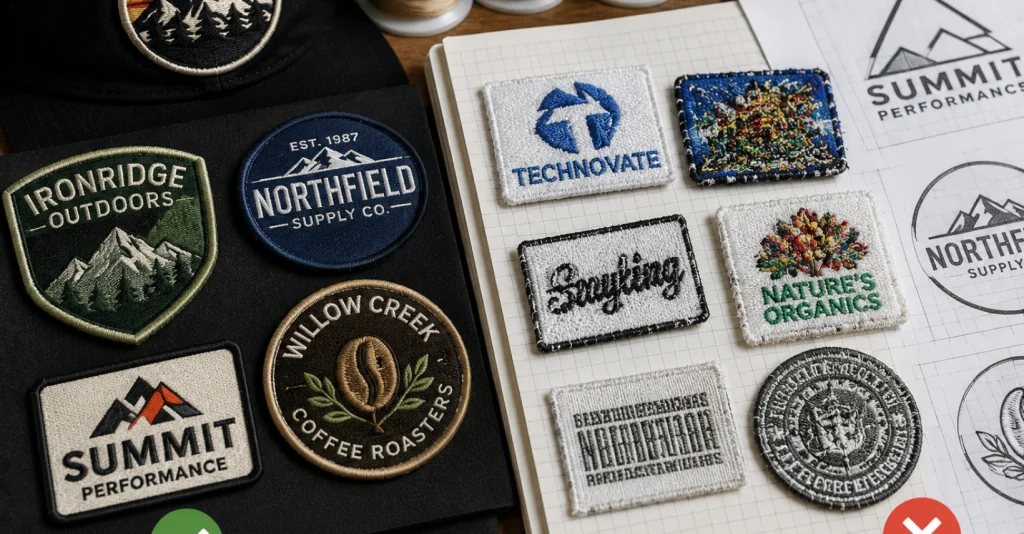
A logo represents much more than a simple graphic. It is the visual identity of a brand, organization, team, or community. Businesses spend countless hours creating logos that communicate their values, personality, and message. On a digital screen, a logo may appear flawless with sharp edges, smooth gradients, and tiny details that look impressive.
However, transferring that same design onto fabric through patches embroidery is a completely different process.
Thread does not behave like pixels. Fabric does not display details the same way as a computer screen. A logo that looks perfect online may require adjustments before it can become a high-quality embroidered patch.
This is where professional expertise becomes essential.
At Patches Maker USA, we understand that creating custom embroidered logo patches is not simply about converting an image into stitches. It is about understanding how colors, shapes, lettering, stitch patterns, and patch sizes work together to create a final product that looks professional and represents your brand correctly.
A successful embroidered patch requires the right balance between creativity and technical knowledge. The best results come when a logo is adapted specifically for embroidery instead of being copied directly from a digital file.
In this guide, we will explain what works, what does not work, and how brands can prepare their logos for outstanding patches embroidery results.
Why Digital Logos and Embroidered Patches Are Different
Many businesses assume that any logo can immediately become an embroidered patch. While modern embroidery technology allows incredible detail, fabric and thread still have physical limitations.
A digital logo is created using pixels. Every small line, shadow, and color transition can be displayed clearly on a screen. Embroidery works differently. It uses thousands of individual stitches placed into fabric.
Several factors influence the final appearance:
- Thread thickness
- Stitch direction
- Fabric texture
- Patch size
- Number of colors
- Design complexity
- Stitch density
For example, a thin line that looks sharp on a website may become too narrow when stitched. Small letters that are readable on a business card may become unclear when embroidered on a small patch.
This does not mean the logo cannot be used. It means the artwork needs professional preparation.
At Patches Maker USA, our approach focuses on optimizing every design before production. We analyze the artwork and recommend adjustments that help maintain clarity, quality, and brand recognition.
The Importance of Designing Logos Specifically for Patches Embroidery
A common mistake brands make is treating embroidery like printing.
Printing allows extremely fine details, unlimited color blending, and smooth gradients. Embroidery creates a raised, textured appearance where every element depends on stitches.
A well-designed embroidered patch considers:
- How thick each line should be
- How letters will appear in thread
- How colors will contrast
- How much space exists between design elements
- How the patch will be viewed from a distance
Professional patch makers do not simply upload a logo and start stitching. They convert artwork into a format suitable for embroidery.
This process is known as digitizing.
Digitizing transforms artwork into a stitch pattern that embroidery machines can understand. The digitizer decides:
- Stitch direction
- Stitch type
- Stitch density
- Layer order
- Thread placement
A professionally digitized design can make the difference between an ordinary patch and a premium-looking embroidered logo patch.
Logo Features That Work Best for Embroidered Patches
Some logos naturally perform better with embroidery. These designs usually have strong visual elements that remain clear when converted into stitches.
Bold Shapes Create Strong Results
Bold and simple shapes are among the best choices for patches embroidery.
Logos with:
- Thick outlines
- Clear symbols
- Strong borders
- Defined shapes
usually maintain their appearance after stitching.
A bold design allows the thread to create visible structure instead of becoming crowded.
For example, a company logo featuring a strong icon and clean lettering will usually translate better than an illustration containing dozens of small details.
The reason is simple: embroidery works best when every stitch has room to stand out.
Strong Contrast Improves Embroidered Logo Visibility
Color selection plays a major role in embroidered patches.
A logo may look attractive on a screen because of subtle color differences, but embroidery requires stronger contrast.
Examples of effective combinations include:
- Dark thread on light fabric
- Light thread on dark fabric
- Bright colors against neutral backgrounds
High contrast helps the logo remain readable even from a distance.
At Patches Maker USA, we help customers select thread colors that enhance visibility while keeping their original brand identity intact.
A logo should not only look good up close. It should be recognizable when placed on uniforms, jackets, hats, backpacks, and other products.
Why Simple Color Palettes Work Better
Many successful embroidered patches use limited color combinations.
Although embroidery machines can handle multiple thread colors, too many colors can create unnecessary complexity.
A logo with two to five carefully selected colors often produces a cleaner and more professional appearance.
Using fewer colors provides several advantages:
Better Visual Clarity
Too many colors can make small designs appear crowded. Simple palettes allow each element to remain noticeable.
More Professional Appearance
Premium brands often rely on clean and balanced color schemes rather than overwhelming designs.
Easier Brand Recognition
Consistent colors help customers immediately identify a brand or organization.
When preparing logos for patches embroidery, the goal is not to copy every shade exactly. The goal is to preserve the identity and impact of the original design.
Typography: Choosing Fonts That Embroider Successfully
Text is one of the biggest challenges in embroidered logo patches.
Many brands use elegant fonts with thin lines, decorative curves, or small lettering. While these fonts may look impressive digitally, they can become difficult to reproduce with thread.
The best embroidery-friendly fonts usually have:
- Medium or bold thickness
- Simple letter shapes
- Clear spacing
- Minimal decorative elements
Sans-serif fonts often perform especially well because they remain readable at smaller sizes.
For example, a company name stitched on a jacket or cap needs to be understood quickly. If customers cannot read the text, the branding opportunity is lost.
When text is important, professional patch makers may recommend:
- Increasing letter size
- Making strokes thicker
- Removing unnecessary details
- Creating a simplified version of the logo
These small adjustments can dramatically improve the final result.
Logo Elements That Often Struggle in Patches Embroidery
While embroidery can create impressive results, not every design element transfers perfectly from digital artwork to fabric. Understanding these limitations helps brands avoid disappointing results and unnecessary production changes.
At Patches Maker USA, we believe in preparing customers before production begins. A professional patch manufacturer should not simply accept every design without evaluation. Instead, the goal should be creating a patch that looks impressive in real-world use.
Let’s look at some common logo features that may require adjustments.
Extremely Small Text Can Become Difficult to Read
Small text is one of the biggest challenges in embroidered logo production.
A company may have a slogan, website address, or detailed wording inside its logo. On a computer screen, everything appears sharp. However, when converted into thread, tiny letters can merge together.
The reason is simple:
Thread has physical thickness.
When multiple small stitches are placed close together, they can create a crowded appearance. Individual letters may lose their shape, making the message difficult to understand.
For embroidered logo patches, text should be:
- Large enough to remain readable
- Properly spaced
- Designed with embroidery limitations in mind
If a slogan is too small, professional patch makers may recommend removing it or creating a simplified version specifically for embroidery.
Many successful brands actually maintain two logo versions:
- A complete digital logo for websites and marketing materials
- An embroidery-friendly version for patches, uniforms, and apparel
This approach protects brand consistency while improving production quality.
Complex Gradients Do Not Always Translate Well
Gradients create beautiful visual effects in digital designs. Smooth transitions between colors can add depth and sophistication.
However, embroidery works differently.
A printed gradient can gradually move from one shade to another. Embroidery cannot create the same smooth transition because each color requires separate thread.
Instead of a seamless blend, gradients may appear as:
- Separate color sections
- Visible stitch patterns
- Uneven transitions
For this reason, flat colors usually perform better in patches embroidery.
Professional designers often convert gradient-based logos into simplified versions using solid thread colors. This maintains the overall appearance while making the design suitable for stitching.
A skilled digitizer knows how to recreate depth using:
- Different stitch directions
- Layering techniques
- Strategic color placement
The goal is not copying every digital effect. The goal is creating the strongest embroidered version of the logo.
Overly Detailed Artwork Can Lose Its Impact
Detailed illustrations can look amazing on posters, websites, and packaging. But embroidery has physical boundaries.
A logo containing:
- Tiny objects
- Multiple fine lines
- Intricate patterns
- Excessive decorative elements
may become unclear when stitched.
This is especially important for smaller patches.
For example, a detailed mascot illustration with facial features, clothing details, and background elements may need simplification. Removing unnecessary details can actually make the main design stronger.
Good embroidery focuses attention on the most important elements.
A successful patch should communicate quickly:
- Who the brand represents
- What the logo means
- What identity it creates
Simplification does not weaken a logo. In many cases, it makes the design more powerful.
Patch Size Has a Major Impact on Embroidery Quality
One of the most overlooked factors in patches embroidery is size.
A logo that works perfectly as a large jacket back patch may not work as a small sleeve patch or hat patch.
Every patch placement creates different requirements.
For example:
Small Cap Patches
Caps usually have limited space. Small areas require simplified designs and fewer details.
Jacket Back Patches
Large patches allow more room for lettering, symbols, and creative elements.
Uniform Patches
Uniform patches often require maximum readability because they represent organizations, teams, or businesses.
Before production begins, it is important to determine:
- Where the patch will be placed
- How large it needs to be
- How far away it should remain readable
At Patches Maker USA, we help customers choose dimensions that maintain both appearance and functionality.
The right size allows embroidery stitches to breathe and prevents the design from becoming crowded.
Understanding Different Embroidery Stitch Types
The quality of an embroidered patch depends heavily on stitch selection.
Different stitches create different textures, finishes, and levels of detail.
Professional digitizing uses stitch types strategically to enhance the design.
Satin Stitch for Smooth and Bold Details
Satin stitches create a smooth, raised appearance.
They are commonly used for:
- Lettering
- Borders
- Thin shapes
- Decorative lines
Because satin stitches have a clean finish, they work especially well for logos that require a polished appearance.
Fill Stitch for Larger Areas
Fill stitches cover larger sections of a design.
They are commonly used for:
- Background areas
- Large symbols
- Bold artwork
Fill stitches create texture and allow designers to build depth within the patch.
Running Stitch for Fine Outlines
Running stitches are lighter and thinner compared to other stitch types.
They are useful for:
- Small outlines
- Decorative details
- Internal design elements
However, they must be used carefully because excessive fine lines may not remain visible.
The Importance of Professional Digitizing
Digitizing is one of the most important steps in creating high-quality patches embroidery.
A poorly digitized design can cause:
- Uneven stitching
- Excessive thread buildup
- Poor readability
- Weak detailing
- Unbalanced appearance
A professional digitizer understands how fabric, thread, and machine movement interact.
At Patches Maker USA, every design is prepared with embroidery performance in mind. We focus on creating stitch patterns that produce clean, durable, and visually appealing patches.
The artwork file is only the beginning. The real craftsmanship happens when that design becomes thread.
Borders and Finishing Options Complete the Patch Design
A patch is not finished when the logo is embroidered. The border and finishing method also influence the final appearance.
The border acts like a frame around the design. It protects the edges while creating a professional finish.
Common border options include:
Merrowed Borders
Merrowed edges are classic raised borders often used for:
- Military patches
- Organization patches
- Uniform badges
- Traditional designs
They provide a clean and durable finish.
Laser-Cut Borders
Laser-cut edges allow more creative shapes.
They are suitable for:
- Modern logos
- Custom shapes
- Detailed outlines
This option gives brands more freedom beyond traditional circular or rectangular patches.
Heat-Cut Borders
Heat-cut finishing provides a smooth edge for unique designs and complex shapes.
Choosing the correct border style helps the patch match the personality of the brand.
A premium logo deserves a premium finishing touch.
When Embroidery May Not Be the Best Choice
Embroidery is one of the most popular patch styles because of its durability, texture, and premium appearance.
However, there are situations where another patch type may provide better results.
Some logos are better suited for:
- Woven patches
- Printed patches
- PVC patches
For example, logos with:
- Extremely tiny details
- Photorealistic images
- Multiple color shades
- Complex artwork
may benefit from alternative methods.
Woven patches can capture finer details because they use thinner threads. Printed patches can reproduce detailed images and gradients more accurately.
A professional patch manufacturer should recommend the best option instead of forcing every design into embroidery.
The goal is always the same:
Create a patch that represents your brand in the best possible way.
Why Brands Choose Patches Maker USA for Custom Logo Patches
Creating a successful embroidered logo patch requires more than an embroidery machine.
It requires experience, attention to detail, and an understanding of branding.
At Patches Maker USA, we help businesses, organizations, clubs, and individuals transform their ideas into professional-quality patches.
Our process focuses on:
Artwork Review
We analyze your logo and identify any possible embroidery challenges before production.
Professional Digitizing
Our team converts your artwork into an optimized stitch pattern designed for fabric.
Quality Materials
We use quality threads, backing options, and finishing techniques to create durable patches.
Customization Options
Customers can choose from different:
- Shapes
- Sizes
- Colors
- Backing styles
- Border finishes
Production Consistency
Whether you need a small batch or large quantity, maintaining consistent quality is always a priority.
A patch represents your identity. We make sure it represents it properly.
Why Testing a Sample Before Bulk Production Matters
One of the biggest mistakes brands make is moving directly into large-scale production without testing the design first.
A logo may look perfect in an artwork file, but the real test happens when it becomes an actual embroidered patch.
A sample allows you to evaluate important details such as:
- Logo clarity
- Thread colors
- Stitch quality
- Patch thickness
- Border appearance
- Overall balance
During the sampling stage, small adjustments can make a significant difference.
For example:
- Increasing the thickness of a letter
- Adjusting spacing between elements
- Changing a thread color for better contrast
- Reducing unnecessary details
These improvements help create a final product that looks professional and matches your expectations.
At Patches Maker USA, we understand that every logo represents something important. Whether it is a business identity, a clothing brand, a sports team, a motorcycle club, or a personal project, the final patch should reflect quality and attention to detail.
A sample is not just a preview. It is an opportunity to perfect the design before full production begins.
Maintaining Brand Consistency Across Different Products
A strong logo should remain recognizable wherever it appears.
Many brands use embroidered patches across multiple products, including:
- Jackets
- Hats
- Uniforms
- Backpacks
- Workwear
- Promotional clothing
- Accessories
However, different placements often require different patch sizes.
A design that works on a large jacket patch may need adjustments for a smaller cap patch.
The challenge is maintaining brand identity while adapting the design for different applications.
Professional patches embroidery focuses on consistency by carefully adjusting:
- Stitch density
- Logo proportions
- Text placement
- Color balance
- Patch dimensions
The goal is simple:
No matter where customers see your patch, they should instantly recognize your brand.
Durability: Why Embroidered Patches Remain Popular
One reason embroidered patches continue to be popular is their durability.
Unlike printed designs that may fade over time, high-quality embroidery creates a textured design built directly with thread.
Well-made patches can handle:
- Regular wear
- Outdoor conditions
- Washing
- Frequent use
This makes embroidered patches ideal for brands and organizations that need long-lasting identity solutions.
Common industries that rely on embroidered patches include:
- Fashion brands
- Construction companies
- Security organizations
- Sports teams
- Military groups
- Motorcycle clubs
- Schools
- Event organizers
The combination of durability and visual appeal makes embroidery one of the most trusted patch options available.
Choosing the Right Backing for Embroidered Logo Patches
The backing option is another important factor that affects how a patch performs.
Different applications require different attachment methods.
Some common backing options include:
Iron-On Backing
Iron-on patches are popular because they allow quick application without sewing.
They are commonly used for:
- Clothing customization
- Fashion projects
- Personal designs
Sew-On Backing
Sew-on patches provide maximum durability.
They are ideal for:
- Work uniforms
- Outdoor clothing
- Heavy-use applications
Velcro Backing
Velcro patches are widely used when designs need to be removed or replaced.
They are common for:
- Tactical clothing
- Organizations
- Security uniforms
Adhesive Backing
Adhesive options work well for temporary applications and promotional purposes.
Selecting the right backing ensures your embroidered patch stays secure and functions properly.
Common Mistakes Brands Make When Ordering Patches Embroidery
Creating custom patches is an exciting process, but some common mistakes can affect the final quality.
Understanding these mistakes helps brands make better decisions.
Mistake 1: Using the Original Logo Without Adjustments
A digital logo is not always ready for embroidery.
Many designs require modifications before stitching.
Ignoring this step can result in:
- Unclear details
- Weak lettering
- Poor visual balance
Professional artwork preparation is essential.
Mistake 2: Making the Patch Too Small
Many customers try to fit detailed logos into very small spaces.
Unfortunately, smaller sizes reduce the amount of detail embroidery can capture.
A slightly larger patch often creates a much better result.
Mistake 3: Choosing Too Many Colors
While multiple colors may look attractive digitally, they can make embroidery complicated and expensive.
A cleaner color palette usually creates a stronger visual impact.
Mistake 4: Ignoring Fabric and Placement
The surface where the patch will be attached matters.
A patch designed for a hat may need different considerations than one designed for a jacket.
Professional advice helps avoid these issues.
How Businesses Use Embroidered Logo Patches for Branding
Custom embroidered patches are not only decorative items. They are powerful branding tools.
Businesses use patches embroidery to create stronger connections with customers and employees.
Some popular applications include:
Employee Uniform Branding
Companies often use embroidered logo patches on uniforms to create a professional appearance.
They help customers quickly identify staff members while strengthening brand visibility.
Fashion and Streetwear Brands
Many clothing brands use embroidered patches as design elements.
The raised texture and premium feel create a unique style that printed graphics often cannot achieve.
Promotional Merchandise
Custom patches can be used as:
- Giveaways
- Customer rewards
- Event merchandise
- Brand collectibles
Because patches are reusable and durable, people often keep them longer than traditional promotional materials.
Clubs and Communities
Organizations use embroidered patches to create identity and belonging.
Examples include:
- Sports clubs
- Motorcycle groups
- Outdoor communities
- Hobby organizations
A well-designed patch becomes a symbol that members proudly display.
Why Quality Matters More Than Price
When ordering custom patches, choosing the lowest price is not always the best decision.
Cheap production can sometimes lead to:
- Poor stitching
- Incorrect colors
- Weak backing
- Uneven edges
- Low durability
A patch represents your image. Poor quality can negatively affect how people view your brand.
High-quality patches embroidery requires skilled production, proper materials, and careful attention to detail.
At Patches Maker USA, we focus on delivering patches that combine:
- Professional appearance
- Strong durability
- Accurate branding
- Reliable craftsmanship
The goal is not simply producing patches. The goal is producing patches customers are proud to use.
Frequently Asked Questions About Patches Embroidery
Can any logo be converted into an embroidered patch?
Most logos can be transformed into embroidered patches, but some designs may require adjustments. Simplifying small details, increasing line thickness, or modifying colors can improve the final result.
What type of logos work best for embroidery?
Logos with bold shapes, clear outlines, strong contrast, and limited colors usually create the best embroidered results.
Are embroidered patches better than printed patches?
It depends on the design. Embroidered patches offer texture, durability, and a premium appearance. Printed patches may be better for highly detailed images or complex gradients.
How many colors should an embroidered patch have?
There is no strict limit, but simpler designs with around two to five colors often produce cleaner and more professional results.
Can small text be embroidered on patches?
Small text can sometimes be embroidered, but it must be large enough to remain readable. Professional digitizing can help determine the best size.
How long do embroidered patches last?
High-quality embroidered patches can last for many years with proper attachment and care. Their durability makes them suitable for clothing, uniforms, and outdoor use.
What file format should I provide for my logo?
Vector files such as AI, EPS, or high-resolution PNG files are usually preferred because they provide clear artwork for digitizing.
Final Thoughts: Creating Better Logos Through Professional Patches Embroidery
A great embroidered patch starts with a great understanding of design.
The best results happen when brands recognize that embroidery is its own creative process. A logo that works digitally may need thoughtful adjustments before becoming a physical patch.
From selecting the right colors to choosing the correct stitch style, every decision affects the final appearance.
Professional patches embroidery transforms ordinary logos into durable, memorable brand symbols. It adds texture, personality, and a premium feel that customers can see and touch.
At Patches Maker USA, we help businesses, organizations, and individuals create custom embroidered patches that represent their identity with confidence.
Whether you need patches for uniforms, apparel brands, events, clubs, or personal projects, our team focuses on quality craftsmanship and reliable results.
Your logo deserves more than a simple transfer onto fabric.
It deserves to become a patch that people notice, remember, and proudly display.