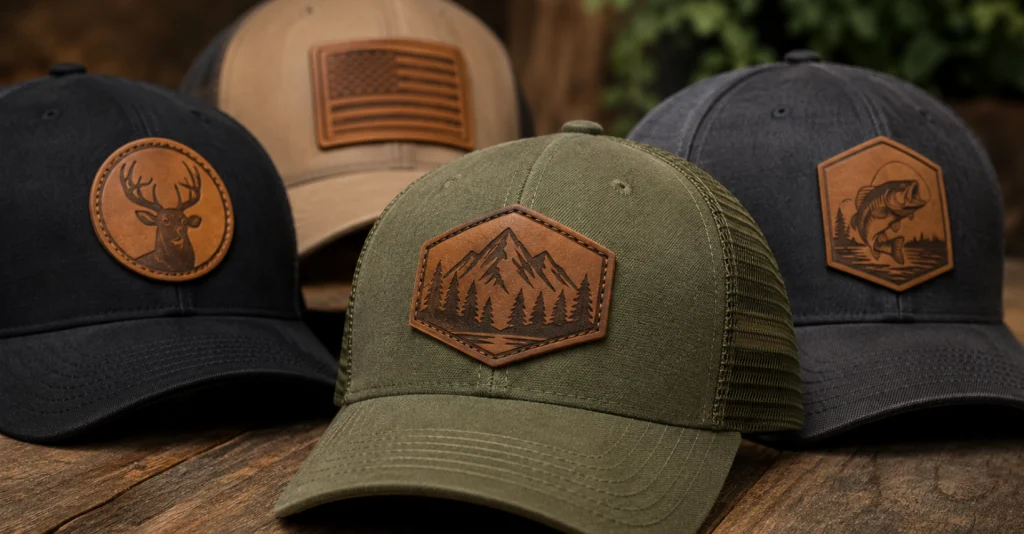
A cap can be simple, practical, and comfortable but the right branding detail can turn an ordinary cap into something memorable. Custom leather patches for caps have become a popular choice for businesses, clothing brands, outdoor companies, clubs, teams, creators, and individuals who want their headwear to have a premium and distinctive appearance.
Unlike traditional embroidery, a leather patch creates a different type of visual impact. Instead of using thread directly on the cap, your logo or artwork is applied to a separate leather or leather-style patch. The result combines texture, depth, character, and branding in a compact design that can make even a simple cap look professionally finished.
At Patches Maker USA, we understand that a patch is more than a decoration. It can represent a company, product, community, lifestyle, or personal identity. That is why choosing the right material, shape, artwork, finish, and application method matters.
Whether you are launching a new apparel collection, ordering branded caps for your business, creating merchandise for an event, or simply looking for a unique way to personalize your favorite headwear, custom leather patches offer a versatile solution.
In this guide, we will explore what makes leather patches for caps so appealing, how they are made, the different customization options available, how to choose the right design, and why they can be an excellent branding investment.
What Are Custom Leather Patches for Caps?
Custom leather patches are specially shaped pieces of leather, faux leather, leatherette, or similar materials that are customized with a logo, name, artwork, slogan, symbol, or other design.
When used on caps, the patch is generally positioned on the front panel, although it can also be placed on the side or back depending on the cap style and branding requirements.
The artwork can be added to the patch using several techniques, including:
- Debossing
- Embossing
- Laser engraving
- Printing
- Combination finishes
- Cut-out or custom-shaped designs
The patch can then be attached to the cap using stitching, heat application, adhesive methods, or another suitable attachment technique.
One of the biggest advantages of a leather patch is that the branding becomes part of a physical design element rather than simply being printed or embroidered directly onto the fabric.
This gives the finished cap a different personality.
A clean logo on a brown leather patch can create a rugged outdoor aesthetic. A black leather patch with subtle engraving can look modern and sophisticated. A natural leather patch can create a vintage or heritage-inspired appearance.
The possibilities are extensive.
Why Are Leather Patches So Popular on Caps?
The popularity of leather patch caps is not based on one particular style. It comes from the combination of appearance, versatility, durability, and perceived quality.
Caps are already one of the most wearable forms of branded merchandise. People wear them while traveling, working, attending events, enjoying outdoor activities, shopping, exercising, or simply completing everyday outfits.
When a cap carries an attractive leather patch, the item can feel less like promotional merchandise and more like a genuine piece of apparel.
That distinction is extremely valuable for brands.
A promotional cap may be worn occasionally because someone receives it for free. A well-designed leather patch cap can be purchased, collected, recommended, and worn repeatedly because the customer actually likes the product.
Leather patches also work particularly well with minimalist branding. Instead of covering a cap with multiple colors and complicated embroidery, a brand can use a relatively simple leather patch to create a strong visual identity.
The Premium Look of Leather Patch Caps
One of the main reasons businesses choose custom leather patches for caps is the premium appearance they can create.
Leather naturally has texture. Depending on the material and finish, it may have a smooth, grainy, distressed, matte, or polished appearance.
When that material is placed against a fabric cap, the contrast immediately becomes noticeable.
Imagine a structured black trucker cap with a dark brown leather patch. The logo does not need to be enormous. The material itself creates visual interest.
Now imagine a neutral-colored cap with a natural leather patch and a simple engraved mountain logo. The design immediately communicates an outdoor, adventurous feeling.
This is one of the strengths of leather patch branding: the material helps communicate the personality of the brand.
A leather patch can make a cap feel:
- Premium
- Rugged
- Traditional
- Modern
- Minimalist
- Outdoor-inspired
- Handmade
- Heritage-focused
- Professional
- Fashion-forward
The final impression depends on how the material, artwork, patch shape, and cap are combined.
Custom Leather Patches vs. Traditional Embroidery
Embroidery remains one of the most popular ways to decorate caps, and for good reason. Embroidery creates a classic, recognizable look and works exceptionally well for many logos.
However, leather patches offer a different design language.
With embroidery, thread forms the logo directly on the cap. With a leather patch, the logo is displayed on a separate material that is attached to the cap.
This distinction gives you more opportunities to create contrast and dimension.
Leather Patches
Leather patches are particularly useful when you want:
- A premium tactile appearance
- A minimalist logo
- A rugged or heritage look
- Strong material contrast
- Engraved or debossed artwork
- A distinctive retail-style finish
Embroidery
Embroidery may be better when you want:
- A traditional stitched appearance
- Multiple thread colors
- Raised 3D puff effects
- Direct branding on the cap
- A classic sports or corporate aesthetic
Neither option is automatically better.
The best choice depends on your brand identity.
Some businesses even combine both techniques for example, a leather patch on the front with small embroidery on the side or back of the cap.
Different Types of Leather for Cap Patches
Choosing the right material is an important part of creating custom leather patches.
Not all leather patches look or perform the same way. Material selection can influence texture, flexibility, appearance, cost, and overall brand positioning.
Genuine Leather
Genuine leather provides an authentic material experience and can be an excellent choice for premium merchandise.
Natural leather can have subtle variations in grain and texture. Over time, certain types can develop a patina, giving the patch additional character.
This makes genuine leather particularly attractive for:
- Premium apparel brands
- Outdoor brands
- Heritage-inspired products
- Motorcycle merchandise
- Western-style apparel
- Premium corporate gifts
- Retail merchandise
If your goal is to create a cap that feels authentic and substantial, genuine leather can be a strong option.
Faux Leather and Leatherette
Faux leather, sometimes called synthetic leather or leatherette, can provide a similar visual concept while offering a more consistent appearance.
This option can be useful for brands that want:
- Consistent color across large orders
- A uniform finish
- Cost-effective production
- Vegan-friendly material options
- Lightweight customization
Faux leather is particularly useful when consistency is a priority. Every patch can maintain a similar appearance, which can be beneficial for larger branded merchandise runs.
Suede-Style Materials
Suede and suede-like materials offer a softer appearance and can create a more relaxed aesthetic.
They can work well with fashion brands, lifestyle merchandise, and caps where a softer visual texture is preferred.
The best material depends on the intended use, budget, design, and overall style of the cap.
Popular Leather Patch Customization Techniques
Once you have selected the patch material, the next decision is how the logo or artwork will be applied.
Different techniques produce different visual results.
Debossed Leather Patches
Debossing presses the design into the surface of the leather.
Instead of the logo sitting above the material, the design appears recessed.
This produces a clean, subtle, and sophisticated effect.
Debossing is particularly effective for:
- Brand names
- Simple logos
- Initials
- Monograms
- Minimalist artwork
- Heritage-style branding
A debossed logo can look understated while still being highly recognizable.
Embossed Leather Patches
Embossing creates the opposite effect.
Instead of pressing the artwork inward, the design is raised from the surface.
This creates additional dimension and makes the logo more tactile.
Embossing can work well when you want the branding to stand out more prominently while maintaining the premium character of leather.
Laser-Engraved Leather Patches
Laser engraving uses a laser to mark the design onto the patch surface.
It is a popular choice for detailed artwork because it can produce sharp lines and precise branding.
Laser engraving can be especially useful for:
- Detailed logos
- Fine line illustrations
- Small lettering
- Outdoor graphics
- Custom symbols
- Complex line art
The final appearance depends on the material, engraving settings, artwork, and desired finish.
Printed Leather-Style Patches
Printing can also be used when your design requires colors that are difficult to achieve through traditional embossing or engraving.
This can be useful when the brand identity depends heavily on color.
However, if your goal is a classic leather aesthetic, monochrome engraving, debossing, or embossing may provide a more authentic appearance.
Choosing the Right Patch Shape
The shape of your leather patch should support your logo rather than fight against it.
Rectangular patches are among the most recognizable options for caps because they provide a practical area for logos and text.
However, you are not limited to rectangles.
Popular patch shapes include:
- Circles
- Ovals
- Squares
- Shields
- Arches
- Diamonds
- Custom silhouettes
- Badge shapes
- Logo-specific outlines
Rectangle Patches
A rectangular leather patch is ideal for horizontal logos and brand names.
It can create a clean, contemporary appearance and works particularly well on structured front panels.
Circular Patches
Circular patches can create a traditional badge-like aesthetic.
They work especially well for:
- Outdoor brands
- Sports-inspired merchandise
- Clubs
- Events
- Lifestyle brands
Shield Patches
Shield shapes can give a cap a strong emblem-style appearance.
They are particularly useful for organizations, clubs, heritage brands, and brands that want a traditional identity.
Custom Shapes
If your logo already has a distinctive silhouette, a custom-shaped patch may provide the strongest result.
Instead of placing your logo inside a generic rectangle, the patch itself can follow the shape of the artwork.
This can create a more integrated and creative appearance.
How to Choose the Right Size for a Leather Cap Patch
Patch size is one of the most important decisions in cap customization.
A patch that is too small may lose visual impact. A patch that is too large can overpower the cap or interfere with the structure of the front panel.
The correct size depends on:
- Cap style
- Front panel dimensions
- Logo proportions
- Amount of text
- Patch shape
- Design complexity
- Placement
For most cap projects, the goal should be balance.
Your patch should be large enough to remain readable from a reasonable distance while leaving enough space around it for the cap itself to remain visible.
Keep Small Text Simple
Small leather patches are not ideal for extremely complicated typography.
If your logo contains a long slogan, multiple lines of text, or very fine details, simplifying the artwork may improve the final result.
A professional patch manufacturer can help determine which elements should be enlarged, simplified, or removed before production.
Designing a Leather Patch That Looks Professional
Great leather patch design is often about knowing what not to include.
Caps have limited branding space, so your design needs to communicate quickly.
Start with the most important element.
Is it your:
- Company logo?
- Brand name?
- Initials?
- Symbol?
- Product name?
- Short slogan?
Choose one primary focus.
Use Strong Shapes
Bold shapes are generally easier to recognize on a small patch.
Avoid unnecessary details that disappear when the patch is reduced.
Limit Excessive Text
If your brand name is already recognizable, there may be no need to add a long description beneath it.
Minimal designs often look more premium on leather.
Consider Contrast
The relationship between the patch and cap color is important.
For example:
- Brown leather on cream
- Black leather on neutral tones
- Tan leather on dark green
- Dark leather on light gray
- Natural leather on navy
Contrast helps the patch become a deliberate focal point.
Best Cap Styles for Leather Patches
Leather patches can be applied to many types of caps, but certain styles naturally complement them.
Trucker Caps
Trucker caps are one of the most popular choices for leather patches.
Their structured front panels provide a stable surface for the patch, while the mesh back gives the cap a relaxed outdoor aesthetic.
This combination works particularly well for:
- Outdoor companies
- Construction businesses
- Hunting and fishing brands
- Breweries
- Farms
- Adventure brands
- Lifestyle businesses
Snapback Caps
Snapbacks provide a modern platform for leather branding.
They are particularly suitable for streetwear, fashion, sports-inspired collections, and promotional merchandise.
A clean rectangular or custom-shaped patch can give a snapback a premium retail appearance.
Dad Hats
Dad hats are softer and more relaxed.
A smaller leather patch can complement the casual shape without making the cap feel overly structured.
This is a good choice for minimalist brands and lifestyle merchandise.
Rope Caps
Rope caps have a distinctive retro aesthetic.
Combining a rope detail with a leather patch can create a strong vintage-inspired identity.
Five-Panel Caps
Five-panel caps provide a clean front surface and are popular in contemporary fashion and outdoor apparel.
A minimalist leather patch can work particularly well on this style.
Leather Patches for Business Branding
Custom caps are an effective way to turn employees, customers, and supporters into walking brand ambassadors.
Unlike traditional advertising, a cap can remain in use long after a campaign ends.
For businesses, leather patches can be especially useful because they can make promotional merchandise feel like a genuine branded product.
Businesses that may benefit include:
- Construction companies
- Landscaping businesses
- Outdoor brands
- Restaurants
- Coffee shops
- Breweries
- Automotive businesses
- Real estate companies
- Clothing brands
- Fitness businesses
- Sports organizations
- Event companies
- Contractors
- Small businesses
A well-designed cap does not need to look like an advertisement.
That is often the point.
If customers enjoy wearing the cap, your logo travels with them.
Leather Patches for Clothing Brands
For apparel companies, the patch is part of the product—not merely a promotional decoration.
A leather patch can help create a consistent visual language across a clothing collection.
For example, a brand could use:
- Leather patches on caps
- Leather labels on jackets
- Woven labels on shirts
- Embroidered branding on hoodies
- Custom patches on bags
This creates consistency while allowing each product to have its own finish.
Leather is particularly suitable for brands that want to communicate craftsmanship, durability, authenticity, or outdoor-inspired values.
Leather Patch Caps for Events and Organizations
Custom leather patches are not limited to commercial brands.
They can also be used for:
- Weddings
- Family reunions
- Charity events
- Company events
- Sports tournaments
- Clubs
- Outdoor gatherings
- Conferences
- Festivals
- Fundraising campaigns
A custom cap can become a memorable keepsake.
Rather than producing generic event merchandise, organizers can create something attendees may continue wearing long after the event has ended.
Why Leather Patches Work So Well for Outdoor Brands
Outdoor brands often need branding that visually communicates durability and authenticity.
Leather naturally fits this aesthetic.
A leather patch on a cap can complement products associated with:
- Hiking
- Camping
- Fishing
- Hunting
- Hiking
- Travel
- Adventure
- Workwear
- Ranch and western lifestyles
The rugged appearance of leather can reinforce the story behind the brand.
This is an important point about branding: customers do not only respond to logos. They respond to the visual and physical signals surrounding the logo.
Material choice is part of brand communication.
Durability and Everyday Wear
Caps experience regular use.
They may be exposed to sunlight, moisture, sweat, dust, friction, and repeated handling.
A well-made patch should therefore be designed with everyday use in mind.
Material quality, patch thickness, edge finishing, attachment method, and cap construction can all influence the finished product.
It is important to understand that no material is completely immune to wear. Natural leather, in particular, can change appearance over time.
For many people, that is actually an advantage.
A natural leather patch can develop character as it ages.
Instead of looking worn out immediately, it can develop a more distinctive appearance through regular use.
Stitching vs. Heat Application
How the patch is attached to the cap can influence the finished appearance and long-term performance.
Sew-On Leather Patches
Stitching the patch directly onto the cap provides a secure attachment and gives the finished product a traditional, crafted appearance.
Visible stitching can also become part of the design.
You can select a thread color that:
- Matches the patch
- Matches the cap
- Contrasts with both
- Complements the brand colors
Heat-Applied Patches
Heat application can provide a clean appearance without visible stitching.
This can be useful for certain designs and production requirements.
The appropriate attachment method depends on the patch material, cap fabric, production requirements, and intended use.
Common Mistakes to Avoid
A great leather patch starts with good planning.
Here are some common mistakes to avoid.
Making the Design Too Complicated
A complicated logo may look impressive on a large screen but lose clarity when reduced to cap size.
Simplification is often the better solution.
Using Too Much Text
Small lettering can become difficult to read.
Prioritize the information that customers actually need to see.
Choosing the Wrong Patch Size
A patch should complement the cap rather than dominate it.
Always consider the front panel dimensions before finalizing your patch size.
Ignoring the Cap Material
The cap and patch need to work together.
A flexible patch on a soft cap may create a different result from the same patch placed on a structured front panel.
Choosing a Finish Without Considering the Brand
A rugged engraved patch may be perfect for an outdoor company but less appropriate for a luxury fashion brand.
Think about what you want customers to feel when they see the cap.
How to Order Custom Leather Patches for Caps
Ordering custom leather patches does not need to be complicated.
At Patches Maker USA, the process can begin with your artwork and requirements.
Step 1: Prepare Your Logo
Provide the clearest version of your logo or artwork available.
Vector artwork is ideal when available, but other file formats may also be usable depending on the design.
Step 2: Select Your Material
Decide whether genuine leather, faux leather, or another suitable material best matches your project.
Step 3: Choose the Patch Shape
Select a standard shape or request a custom shape based on your logo.
Step 4: Select the Decoration Method
Consider debossing, embossing, engraving, printing, or another suitable finish.
Step 5: Choose the Patch Size
Your cap style and artwork will help determine the appropriate dimensions.
Step 6: Decide How the Patch Will Be Attached
Sew-on and heat-applied options can each provide different visual and practical results.
Step 7: Review the Artwork
Before production begins, carefully review the design.
Check:
- Logo proportions
- Spelling
- Text size
- Patch dimensions
- Shape
- Position
- Material
- Finish
A small design adjustment before production can make a major difference to the final cap.
Why Work With a Professional Patch Manufacturer?
Creating a leather patch may sound straightforward, but small production details can significantly affect the final appearance.
A professional manufacturer understands how different materials respond to engraving, embossing, cutting, stitching, and application.
They can also help identify potential issues before production.
For example, a logo may need to be simplified because certain details are too fine for the selected patch size.
A patch may need to be resized to fit the cap properly.
The attachment method may need to be changed depending on the cap material.
These decisions are easier when you have an experienced production partner.
Custom Leather Patches for Small and Large Brands
One of the advantages of custom patches is their scalability.
You might be a small business ordering your first set of branded caps.
Or you could be an established apparel company preparing merchandise for a new product launch.
The basic design principles remain the same:
Create something people actually want to wear.
Your logo is important, but the cap itself needs to look good.
Think about the customer first.
Would they wear the cap even if they were not being paid to promote your brand?
If the answer is yes, you have created merchandise with genuine value.
How Leather Patches Can Strengthen Brand Identity
Branding is about consistency.
When customers repeatedly see the same logo, colors, shapes, materials, and visual style, your business becomes easier to recognize.
A leather patch can become part of that identity.
For example, a company might use a specific:
- Leather color
- Patch shape
- Border style
- Engraving style
- Logo treatment
- Stitching color
Across its caps and other merchandise.
Over time, customers may begin to associate that particular patch style with the brand itself.
That is much more powerful than simply putting a logo on a product.
Are Custom Leather Patches Worth It?
For many brands, yes.
The value of a leather patch is not simply the cost of producing the patch.
It comes from the combination of:
- Visual appeal
- Brand recognition
- Product differentiation
- Perceived quality
- Wearability
- Long-term use
- Customer experience
A basic cap can be easily forgotten.
A well-designed leather patch cap can become a recognizable part of a customer’s wardrobe.
For apparel brands, this can help products feel more premium.
For businesses, it can make promotional merchandise more desirable.
For individuals, it provides an opportunity to create something personal and unique.
Frequently Asked Questions About Custom Leather Patches for Caps
Can leather patches be customized with any logo?
Most logos can be adapted for leather patch production, but very fine details or extremely small text may need to be simplified. A design review can help determine the best approach.
Are leather patches suitable for trucker caps?
Yes. Trucker caps are one of the most popular styles for leather patch customization because their structured front panels provide a suitable surface for branding.
Can I choose a custom patch shape?
Yes. Leather patches can be produced in many standard and custom shapes depending on the artwork and production requirements.
Are genuine leather patches better than faux leather?
Neither is universally better. Genuine leather offers natural texture and character, while faux leather can provide consistent appearance and a cost-effective alternative. The right choice depends on your brand and project requirements.
Can leather patches be engraved?
Yes. Laser engraving is a popular way to apply detailed artwork, logos, text, and symbols to suitable leather and leather-style materials.
Can leather patches be used for business merchandise?
Absolutely. Custom leather patch caps can be used as employee apparel, customer merchandise, promotional products, retail products, event giveaways, and branded gifts.
Do leather patches work on different cap styles?
Yes. They can work with trucker caps, snapbacks, dad hats, five-panel caps, rope caps, and other suitable headwear styles.
Can I combine leather patches with embroidery?
Yes. Combining a leather front patch with embroidered side or back branding can create a layered and distinctive cap design.
Will leather patches change appearance over time?
Natural leather can develop changes in texture and color as it ages. This can create a unique patina and is one of the characteristics many customers appreciate about genuine leather.
Final Thoughts: Make Your Caps More Than Just Branded Merchandise
A cap does not need a complicated design to make an impression.
Sometimes, one carefully designed detail is enough.
Custom leather patches for caps provide that detail by combining branding with material, texture, and personality. Whether you are building a clothing brand, promoting a local business, creating merchandise for an event, or developing premium branded headwear, a leather patch can transform a simple cap into a product customers actually want to wear.
The key is to think beyond the logo.
Choose a patch material that reflects your brand. Select a shape that complements your artwork. Keep the design clear. Choose an appropriate size. Consider the cap style. Select a finish that supports your visual identity. And make sure the patch is produced and attached with attention to detail.
At Patches Maker USA, our goal is to help brands turn their artwork into custom patches that look purposeful, professional, and distinctive.
Your cap is more than something people wear on their head.
It can represent your business.
It can tell your story.
It can become part of your clothing collection.
It can create a memorable connection between your brand and the people who support it.
If you are ready to give your caps a more premium and recognizable identity, custom leather patches are worth considering.
A small patch can make a big difference.
Ready to create your own custom leather patches for caps? Start your project with Patches Maker USA and turn your logo into a patch designed around your brand.