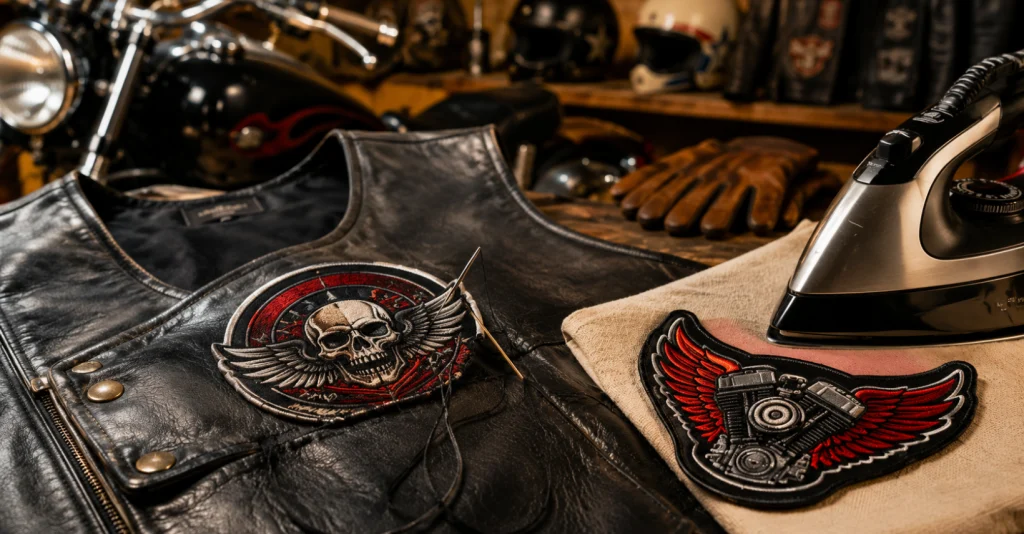
Motorcycle patches have always been more than simple accessories. They represent identity, loyalty, achievements, riding clubs, military service, charity organizations, businesses, and personal style. Whether you’re riding across the country or attending a local bike rally, your patches tell a story before you even introduce yourself.
Choosing the right attachment method is just as important as selecting the patch design itself. Many riders spend hours deciding on artwork, colors, borders, and embroidery styles, but often overlook one critical detail how the patch will stay attached to their vest, jacket, hoodie, or riding gear.
The two most popular attachment methods are iron-on and sew-on motorcycle patches. Both offer distinct advantages, but each also comes with limitations depending on how and where the patch will be used.
At Patches Maker USA, we’ve worked with motorcycle clubs, independent riders, veteran organizations, event organizers, and custom apparel businesses across the country. Over the years, we’ve seen firsthand that the best choice depends on your riding habits, garment type, and long-term expectations.
This guide explains everything you need to know before ordering your next custom motorcycle patch.
Why Motorcycle Patches Mean More Than Decoration
Motorcycle culture has always embraced symbolism. Every patch has meaning, whether it’s earned through years of riding, represents a club chapter, honors military service, commemorates a charity ride, or simply showcases a rider’s personality.
Unlike fashion patches that change with trends, motorcycle patches often remain on jackets or vests for years. Many become lifelong keepsakes that travel thousands of miles alongside their owners.
Because of this, durability matters.
Motorcycle clothing experiences conditions that everyday apparel rarely encounters, including:
- Long highway rides
- Heavy wind pressure
- Rainstorms
- Intense sunlight
- Road dust
- Constant movement
- Frequent washing
- Thick leather materials
- Heavy denim fabrics
A patch that isn’t attached properly may begin peeling, curling, or loosening over time. That’s why understanding attachment methods is essential before placing an order.
Understanding Iron-On Motorcycle Patches
Iron-on patches include a special heat-activated adhesive applied to the back during manufacturing.
When heat and pressure are applied using a household iron or professional heat press, the adhesive melts and bonds to the fabric beneath it.
This creates a clean appearance without visible stitching around the patch.
Many customers choose iron-on patches because they’re quick to apply and don’t require sewing experience.
The process generally takes only a few minutes.
Typical Iron-On Application
- Position the patch.
- Cover it with protective cloth.
- Apply heat.
- Maintain firm pressure.
- Allow it to cool completely.
Once cooled, the adhesive creates its initial bond.
However, the final strength depends heavily on:
- Fabric type
- Heat consistency
- Pressure
- Application time
- Adhesive quality
Why Riders Choose Iron-On Motorcycle Patches
Iron-on patches have become increasingly popular because they simplify customization.
Instead of visiting a tailor or using sewing equipment, riders can personalize jackets at home.
Some common reasons include:
Fast Installation
Applying an iron-on patch usually takes less than ten minutes.
There’s no threading needles, matching thread colors, or complicated stitching.
For riders preparing for rallies or events, this convenience is a significant advantage.
Clean Appearance
Iron-on patches leave no visible stitch holes.
This creates a smooth, professional finish, especially on lightweight garments.
Many fashion-inspired motorcycle jackets benefit from this seamless appearance.
Great for Temporary Designs
Some riders enjoy updating their gear regularly.
Perhaps they attend different charity rides each year or like changing decorative patches.
Iron-on patches make this process easier because they’re often simpler to remove than permanently stitched patches.
Beginner Friendly
Not everyone knows how to sew.
Iron-on backing allows virtually anyone to personalize clothing without specialized skills.
This accessibility has made custom patches more popular among new riders.
Budget-Friendly Installation
Hiring a tailor for multiple patches can become expensive.
Iron-on application eliminates additional labor costs.
For customers ordering numerous decorative patches, this can reduce overall project expenses.
The Limitations of Iron-On Motorcycle Patches
Although convenient, iron-on patches aren’t always the ideal solution.
Motorcycle apparel faces extreme conditions that place continuous stress on adhesives.
Understanding these limitations helps riders make informed decisions.
Heat Can Weaken Adhesive
Motorcycle jackets frequently sit under direct sunlight.
Black leather can become surprisingly hot during summer rides.
Repeated heating and cooling cycles gradually weaken many adhesives.
Over time, corners may begin lifting.
Premium adhesives last longer, but no adhesive lasts forever under constant environmental stress.
Moisture Can Reduce Bond Strength
Rain, humidity, and repeated washing slowly affect adhesive performance.
Even waterproof riding gear can trap moisture beneath patch edges.
As the adhesive ages, moisture infiltration increases.
Eventually, lifting may occur.
Heavy Patches May Shift
Large embroidered back patches contain substantial thread density.
These heavier patches place more stress on adhesive alone.
For oversized motorcycle club patches, stitching often provides greater long-term security.
Leather Can Be Difficult
Leather requires careful heat application.
Too much heat may damage the material.
Too little heat prevents proper adhesive activation.
This makes leather jackets one of the more challenging garments for iron-on application.
Frequent Washing
Motorcycle hoodies, denim jackets, and cotton riding shirts often require regular washing.
Each wash slightly stresses adhesive bonds.
After repeated cycles, some patches begin separating from the fabric.
What Are Sew-On Motorcycle Patches?
Sew-on patches rely entirely on stitching rather than adhesive.
The patch is secured by thread around its border or, for larger patches, with additional internal stitching where needed.
This traditional attachment method has remained the preferred choice for motorcycle clubs for decades because of its exceptional durability.
Unlike adhesive-backed patches, stitched patches aren’t affected by heat in the same way and can withstand years of regular wear when properly sewn.
Whether attached by hand or with an industrial sewing machine, a well-sewn patch becomes an integral part of the garment.
This is one reason many motorcycle clubs require members to sew official club colors onto their vests instead of relying solely on adhesive backing.
Why Serious Riders Often Prefer Sew-On Patches
While iron-on patches offer convenience, sew-on patches are built with longevity in mind.
Riders who spend long hours on the road often prioritize reliability over installation speed.
Here are some of the biggest advantages of sew-on motorcycle patches.
Outstanding Durability
Stitching creates a mechanical bond rather than an adhesive bond.
As long as the thread remains intact, the patch stays firmly attached.
This makes sew-on patches an excellent choice for:
- Leather motorcycle vests
- Heavy denim jackets
- Riding backpacks
- Tool bags
- Club colors
- Memorial patches
Even after years of riding, a professionally sewn patch is far less likely to peel or detach.
Handles Harsh Riding Conditions
Motorcycle gear is exposed to:
- Strong wind
- Heavy rain
- Dust
- Mud
- UV rays
- Friction
- Constant movement
Unlike adhesives, stitching isn’t weakened by heat or moisture in the same way, making it ideal for riders who use their gear in demanding environments.
Detailed Comparison and Choosing the Right Option
As we’ve discussed, both iron-on and sew-on motorcycle patches have their strengths. The best choice depends on how often you ride, the type of garment you’re customizing, and how permanent you want your patches to be. In this section, we’ll dive deeper into the advantages and disadvantages of sew-on patches, compare both attachment methods side by side, and help you decide which option fits your riding lifestyle.
More Benefits of Sew-On Motorcycle Patches
While sew-on patches require more effort during installation, they provide unmatched reliability that many experienced riders appreciate.
Ideal for Large Back Patches
One of the biggest advantages of sew-on patches is their ability to securely hold large designs.
Back patches typically feature:
- Club logos
- Memorial artwork
- Custom graphics
- Event emblems
- Chapter identifiers
These oversized patches can be heavy due to dense embroidery or multiple fabric layers. Stitching distributes the weight evenly around the patch, reducing the risk of sagging or detachment over time.
For motorcycle clubs that wear large center-back patches, sewing remains the preferred attachment method.
Excellent for Leather Motorcycle Vests
Leather is one of the most common materials used for motorcycle apparel, but it’s also one of the most challenging surfaces for heat-activated adhesives.
Sewing offers a dependable solution because it doesn’t rely on heat or glue. With the proper tools and techniques, patches can be securely attached without compromising the vest’s appearance.
Many professional tailors specialize in sewing patches onto leather garments, ensuring a clean and durable finish.
Better Resistance to Daily Wear
Motorcycle gear experiences constant movement while riding. Wind pressure, shoulder straps, backpacks, and protective equipment create ongoing friction against patches.
Stitching keeps the patch firmly in place despite these challenges, making sew-on patches well suited for riders who spend significant time on the road.
Long-Term Value
Although sewing may involve a slightly higher upfront cost, it often proves more economical over time.
A securely sewn patch is less likely to require repairs or replacement, reducing maintenance expenses and preserving the appearance of your gear for years.
Drawbacks of Sew-On Motorcycle Patches
No attachment method is perfect. Sew-on patches also have a few considerations that buyers should keep in mind.
Longer Installation Time
Unlike iron-on patches, which can often be applied in minutes, sewing requires more time and precision.
Depending on the size and complexity of the patch, installation may take anywhere from 15 minutes to over an hour.
For riders adding several patches to one vest, the process naturally becomes more time-consuming.
May Require Professional Assistance
While some people enjoy sewing their own patches, others prefer professional installation especially when working with thick leather or heavyweight materials.
Using the wrong needle, thread, or stitching technique can damage the garment or result in uneven seams.
Professional sewing ensures a polished appearance but may add to the overall project cost.
More Permanent
Once a patch has been sewn onto a garment, removing it leaves small stitch holes.
Although these holes often become less noticeable over time, they can remain visible, particularly on leather or tightly woven fabrics.
If you frequently change your patch designs, a sewn attachment may not be the most convenient option.
Difficult to Reposition
With iron-on patches, you can often adjust placement before applying heat.
Sew-on patches require more careful planning because repositioning them means removing stitches and sewing them again.
Taking accurate measurements before installation helps achieve the desired layout.
Iron-On vs. Sew-On Motorcycle Patches: Side-by-Side Comparison
| Feature | Iron-On Patches | Sew-On Patches |
|---|---|---|
| Installation Time | Fast | Moderate to Slow |
| Skill Required | Beginner-Friendly | Basic to Advanced Sewing |
| Durability | Good | Excellent |
| Heat Resistance | Moderate | Excellent |
| Rain Resistance | Moderate | Excellent |
| Best for Leather | Limited | Excellent |
| Large Back Patches | Not Recommended Alone | Highly Recommended |
| Easy to Remove | Yes | More Difficult |
| Long-Term Reliability | Good | Outstanding |
| Professional Appearance | Excellent | Excellent |
| Best for Frequent Riding | Fair | Excellent |
| Maintenance | Moderate | Low |
Which Motorcycle Riders Should Choose Iron-On Patches?
Iron-on patches are a practical choice for riders who prioritize convenience and flexibility.
They are especially suitable for:
Casual Riders
If you ride occasionally and wear your motorcycle jacket primarily during weekend outings or local events, iron-on patches can provide an attractive and cost-effective solution.
Event Participants
Temporary rides, charity events, motorcycle rallies, and seasonal gatherings often inspire riders to add commemorative patches.
Iron-on patches make it easy to personalize apparel without committing to permanent stitching.
Beginners
New riders customizing their first jacket often appreciate the simplicity of iron-on patches.
They can quickly personalize their gear without needing sewing equipment or professional assistance.
Fashion-Focused Riders
Some riders treat motorcycle apparel as part of their everyday wardrobe.
If style updates are common, iron-on patches allow for easier changes as trends or personal preferences evolve.
Which Motorcycle Riders Should Choose Sew-On Patches?
For riders who expect their gear to last through years of adventures, sew-on patches remain the trusted choice.
Motorcycle Clubs
Club patches represent commitment and identity.
Members typically wear the same patches for years, making durability a top priority.
Sew-on attachment helps ensure these important emblems remain secure.
Long-Distance Touring Riders
Cross-country trips expose jackets and vests to thousands of miles of wind, rain, dust, and changing weather conditions.
Stitched patches offer the reliability needed for these demanding journeys.
Military Veterans
Many veterans display service patches with pride on motorcycle vests.
Because these patches often carry deep personal significance, secure stitching provides added peace of mind.
Collectors
Some enthusiasts collect limited-edition motorcycle patches from rallies, clubs, and historic rides.
Properly sewn patches help preserve these valuable keepsakes for years to come.
Best Attachment Method by Fabric Type
Choosing the right backing also depends on the material you’re customizing.
Leather
Best Choice: Sew-On
Leather doesn’t always respond well to heat, and excessive temperatures can damage its finish. Sewing offers greater security and longevity.
Denim
Best Choice: Either Option
Denim works well with both iron-on and sew-on patches.
For decorative patches, iron-on may be sufficient. For large or frequently worn patches, stitching provides added durability.
Canvas
Best Choice: Sew-On
Canvas is commonly used for backpacks, tool bags, and riding accessories.
These items experience heavy use, making sewn patches the more dependable option.
Cotton Hoodies and Shirts
Best Choice: Iron-On or Sew-On
For lightweight apparel, both attachment methods perform well.
The decision usually comes down to whether you want easy application or maximum longevity.
Can You Combine Both Methods?
Absolutely.
Many experienced riders use a combination of iron-on and sew-on attachment for the best of both worlds.
A common approach is to:
- Use the iron-on backing to temporarily secure the patch in the perfect position.
- Sew around the border afterward for maximum strength.
This method prevents the patch from shifting during sewing while creating an exceptionally durable attachment.
It is especially recommended for:
- Large back patches
- Leather vests
- Club colors
- Frequently worn riding jackets
- Heavy embroidered designs
By combining adhesive and stitching, riders gain both installation convenience and long-term reliability.
Care Tips, Common Mistakes, FAQs & Conclusion
Choosing between iron-on and sew-on motorcycle patches is only part of the equation. Proper application and ongoing care play a significant role in determining how well your patches perform over time. Even the highest-quality custom patch can lose its appeal if it’s installed incorrectly or neglected.
In this final section, we’ll explore common mistakes to avoid, practical maintenance tips, and why investing in premium custom patches from Patches Maker USA makes a difference.
Common Mistakes When Applying Motorcycle Patches
Many patch-related issues are caused by installation errors rather than poor-quality products. Avoiding these mistakes will help keep your patches looking great for years.
Applying Iron-On Patches to Heat-Sensitive Materials
Not every fabric is suitable for heat application.
Materials such as:
- Genuine leather
- Faux leather
- Nylon
- Polyester blends
- Waterproof fabrics
may react poorly to high temperatures.
Always check the garment manufacturer’s care label before using an iron.
If you’re unsure, sewing is usually the safer option.
Not Cleaning the Garment First
Dust, oils, lint, and dirt can reduce the effectiveness of both adhesives and stitching.
Before attaching a patch:
- Wash washable garments.
- Wipe leather with a suitable cleaner.
- Ensure the surface is completely dry.
- Remove loose fibers.
A clean surface creates a stronger bond and improves the overall appearance.
Incorrect Patch Placement
One of the most common mistakes is rushing the positioning process.
Before attaching a patch:
- Wear the jacket or vest.
- Stand in front of a mirror.
- Use masking tape or fabric clips.
- Check alignment from different angles.
Taking a few extra minutes can prevent permanent placement errors.
Using Low Heat on Iron-On Patches
If the iron isn’t hot enough, the adhesive won’t fully activate.
The result is often:
- Lifting edges
- Weak adhesion
- Premature peeling
Always follow the application instructions provided with your patch.
Overheating the Patch
Excessive heat can damage:
- Embroidery threads
- Patch backing
- Fabric
- Leather finishes
Using a pressing cloth between the iron and the patch helps protect both the patch and the garment.
Ignoring Cooling Time
Many people try to test the bond immediately after ironing.
The adhesive continues to set as it cools.
Allow the patch to cool completely before handling or wearing the garment.
How to Care for Motorcycle Patches
Proper maintenance extends the life of both iron-on and sew-on patches.
Wash Less Frequently
Motorcycle jackets and leather vests don’t need frequent washing.
Spot cleaning whenever possible helps preserve both the garment and the patch.
Turn Garments Inside Out
For washable items such as denim jackets or hoodies:
- Turn them inside out.
- Use cold water.
- Select a gentle cycle.
This minimizes friction against embroidered surfaces.
Avoid High Heat Dryers
High temperatures can weaken adhesives and stress embroidery threads.
Whenever possible:
- Air dry garments.
- Hang leather items naturally.
- Avoid direct heat sources.
Inspect Patch Edges Regularly
Every few months, check for:
- Loose stitching
- Lifted corners
- Fraying borders
- Worn thread
Addressing small issues early helps prevent larger repairs later.
Store Gear Properly
When not riding:
- Hang jackets on sturdy hangers.
- Keep vests dry.
- Avoid prolonged exposure to sunlight.
- Store in a cool, ventilated area.
Proper storage helps preserve both the garment and the patch’s appearance.
How to Decide Between Iron-On and Sew-On Patches
If you’re still unsure which option best suits your needs, ask yourself these questions:
How often do you ride?
Frequent riders benefit from the long-term durability of sew-on patches.
Occasional riders may find iron-on patches perfectly adequate.
What type of garment are you customizing?
Leather generally favors stitching.
Cotton and denim can accommodate either method.
Is the patch temporary or permanent?
Temporary event patches are ideal for iron-on backing.
Permanent club colors and memorial patches are better sewn.
How large is the patch?
Small chest patches work well with either option.
Large back patches are far more secure when sewn.
Will the garment be washed frequently?
Frequent washing places additional stress on adhesives.
Stitching offers greater long-term reliability.
Why Quality Matters More Than Backing Type
Whether you choose iron-on or sew-on, the quality of the patch itself has the greatest impact on performance.
A premium motorcycle patch should include:
- High-density embroidery
- Strong twill backing
- Durable border stitching
- Vibrant, fade-resistant threads
- Precision-cut edges
- Consistent craftsmanship
Low-quality patches may fade, fray, or lose their shape long before the attachment method becomes an issue.
That’s why selecting an experienced patch manufacturer is just as important as choosing the right backing.
Why Riders Choose Patches Maker USA
At Patches Maker USA, we understand that motorcycle patches are more than accessories they represent passion, identity, and years of memories on the road.
That’s why every custom patch is produced with attention to detail and premium materials designed to withstand everyday use.
Our custom motorcycle patches offer:
- Premium embroidery with crisp detailing
- Durable twill backing
- Iron-on, sew-on, Velcro, and adhesive backing options
- Custom shapes and sizes
- Vibrant thread colors
- Precision-cut borders
- Low minimum order quantities
- Competitive pricing
- Fast production and nationwide delivery
- Personalized support from concept to completion
Whether you’re ordering a single commemorative patch or outfitting an entire motorcycle club, our team is committed to delivering patches that match your vision and stand up to the demands of the road.
Frequently Asked Questions
Are sew-on motorcycle patches more durable than iron-on patches?
Yes. Sew-on patches generally provide greater long-term durability, especially for leather vests, large back patches, and gear exposed to frequent riding.
Can iron-on patches be sewn later?
Absolutely. Many riders iron the patch into place first and then sew around the edges for added security.
Will iron-on patches stay attached during long rides?
High-quality iron-on patches can perform well on suitable fabrics, but prolonged exposure to heat, moisture, and frequent washing may gradually weaken the adhesive.
Can I iron patches onto leather?
This is generally not recommended. Leather can be damaged by heat, and adhesives may not bond reliably. Sewing is the preferred method for leather garments.
Which option is better for motorcycle club patches?
Sew-on patches are the preferred choice for official club colors because they provide maximum durability and a permanent, professional appearance.
Do custom motorcycle patches fade over time?
Premium embroidered patches made with high-quality threads are designed to resist fading. Proper care and storage will help preserve their appearance for years.
Final Verdict: Iron-On vs. Sew-On Motorcycle Patches
There isn’t a one-size-fits-all answer when it comes to choosing between iron-on and sew-on motorcycle patches. The right option depends on your riding habits, the type of apparel you’re customizing, and how long you expect the patch to remain in place.
If convenience, quick application, and flexibility are your priorities, iron-on patches are an excellent solution for casual riders and temporary designs.
However, if you value long-term durability, especially for leather vests, club colors, large back patches, or gear that sees frequent use, sew-on patches remain the gold standard.
Many experienced riders choose a combination of both methods using the iron-on backing to position the patch before reinforcing it with stitching. This approach delivers the convenience of adhesive placement with the lasting security of sewn edges.
No matter which attachment method you choose, investing in a well-crafted custom patch ensures that your design will continue to represent your journey for years to come.
Ride with Confidence Using Custom Motorcycle Patches from Patches Maker USA
At Patches Maker USA, we specialize in creating custom motorcycle patches that combine exceptional craftsmanship with long-lasting performance. Whether you need embroidered club patches, memorial designs, biker vest patches, event patches, or fully personalized artwork, our team is here to bring your ideas to life.
Explore our wide range of customization options and let us help you create patches that reflect your story, your club, and your passion for the open road. Your next ride deserves patches built to last.